
Surviving Hurricane Ida: What the Winds Could Not Take
Posted on: August 27, 2026 in General Industry
By: James Junkin
Hurricane Ida taught me that storms take things from you, but never everything. Those of us on the Gulf Coast don’t remember hurricanes by name. We remember them by consequence. We remember the frantic calls, the long gas lines, and the nervous glances at the sky.
I moved to Tangipahoa Parish in 2013 to escape the coast, after surviving Katrina and Gustav. Then, in 2021, Hurricane Ida found me anyway. Each storm taught lessons about preparedness, resilience, and how quickly life can change. The emotions were always the same: fear, uncertainty, and eventually the will to rebuild.
When Hurricane Ida began moving toward Louisiana, many of us noticed the date immediately. August 29, sixteen years after Katrina. That anniversary alone created a sense of dread. The years between Katrina and Ida brought real progress, yet our vulnerability to nature never changed.
As a safety professional, preparedness has always shaped my work. But hurricanes make every professional lesson deeply personal. There’s a real difference between discussing contingency plans and watching a storm approach your own home. Hurricane Ida reminded me that emergency management is ultimately about people.
The Meteorological History of Hurricane Ida
Hurricane Ida began in late August 2021 as a tropical wave in the Caribbean. After crossing Cuba, it entered the Gulf, where warm waters fueled rapid strengthening. Forecasters worried most about the speed of intensification, since it shortens preparation time for entire communities.
By the time it reached Louisiana, Ida had become a powerful Category 4 storm. On August 29, exactly sixteen years after Katrina, it struck near Port Fourchon with 150 mph winds. Unlike Katrina, Ida is remembered mostly for extreme, sustained wind damage rather than flooding.
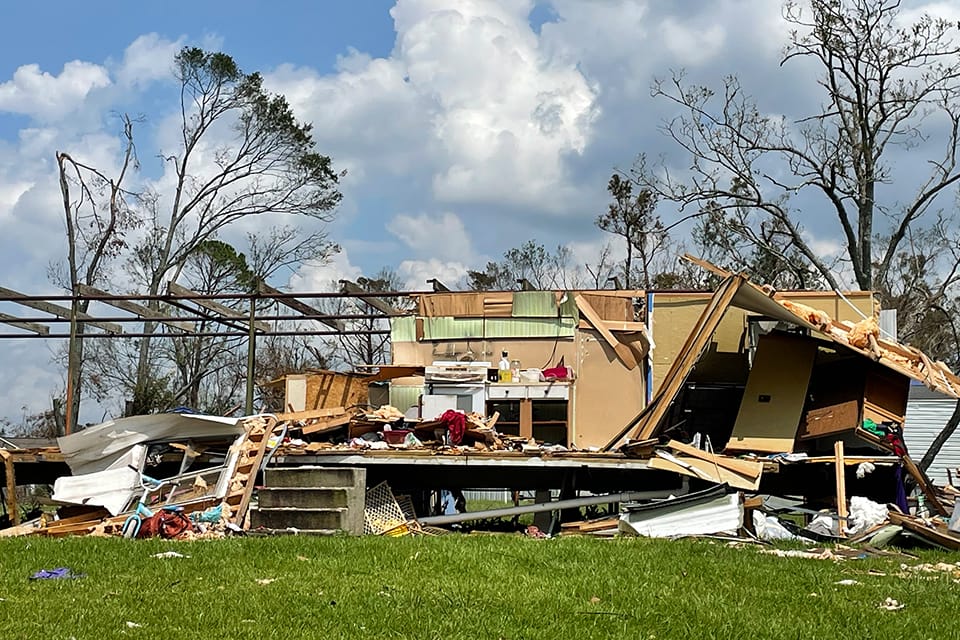
Trees that survived past storms were uprooted. Roofs were peeled from buildings, and entire neighborhoods changed within hours. Ida also produced heavy rain, tornadoes, and widespread outages as it moved inland. For those of us in its path, Hurricane Ida became one of the defining storms of our lives.
The Day the Lights Went Out
The days before landfall felt painfully familiar. I checked forecasts constantly, gathered supplies, and secured important documents. Even after years of experience, the uncertainty never got easier. The forecast kept worsening, and denial became harder to sustain.
On landfall day, conditions deteriorated fast. Rain bands intensified, and winds grew louder by the hour. Trees bent and cracked under the strain, and debris filled the air. Water began seeping through our ceiling and light fixtures.
Then the lights went out completely. Air conditioning stopped, and entire neighborhoods fell silent except for the storm. We switched to generator power with dwindling fuel. The days that followed brought relentless heat, fuel shortages, and long lines for basic supplies.
On my five acres alone, 37 trees came down, blocking every exit. I cleared a path by ATV to check on neighbors. Roads were buried in debris, and most homes nearby suffered serious roof damage. According to Louisiana health officials, Hurricane Ida caused 26 deaths in the state alone, and 122 nationwide.
Hurricane Ida reinforced a lesson I first learned during Katrina. People can die during a storm, and long after it passes. Surviving the hurricane is only the first challenge. Rebuilding afterward often demands even more endurance and patience.
A Community of Survivors
Louisiana’s greatest strength has always been its people, and Hurricane Ida proved it again. Neighbors started helping neighbors almost immediately, clearing roads and checking on elderly residents. Help soon arrived from across the country, driven by strangers who simply wanted to serve.
My family was fortunate; our home stood, but massive trees trapped us on our property. With a weak cell signal, I posted a photo online, flag raised high above the wreckage. Not long after, four young men from Alabama replied with five words: “Hold on, help is on the way.”
They drove nearly ten hours through blocked roads to reach us, arriving with trucks, chainsaws, and heavy equipment. All day, they cleared fallen trees that had trapped us for days. That night, they slept outside on a tarp rather than accept our comfortable beds.
Over the next five days, they moved house to house, helping neighbor after neighbor. They asked for nothing, not money, not recognition, just the chance to help. Those men reminded me that even amid destruction, hope and decency still exist.
When Your Business Is Fighting to Survive
Hurricane Ida taught me that preparedness extends beyond keeping people safe. For many businesses, the real test begins after the storm passes. Business interruption insurance rarely covers the full cost of recovery.
After Ida, I spoke with owners facing facility damage, workforce disruption, and supply chain failures. The organizations that recovered fastest had continuity plans and secure backup systems. They communicated clearly with employees and customers throughout the crisis.
Every business in hurricane-prone regions needs a real disaster recovery strategy. Plans should identify critical functions, secure records, and address supply chain risks. A plan that’s never tested may fail exactly when it’s needed most.
Lessons for Families
If Hurricane Ida taught one lesson above all, it’s that families need real plans. Every household should know how to reconnect if communication systems fail. Meeting locations, evacuation routes, and emergency contacts should be set well in advance.
Emergency supplies matter just as much. Water, food, medication, and fuel should be reviewed regularly, not gathered at the last minute. Families should also secure insurance policies, records, and photographs, since access to information matters after a storm too.
Vulnerable family members, including children, elderly relatives, and pets, need specific planning. Preparedness is ultimately an expression of care for the people we love most. Hurricane Ida reminded me that while we can’t control disasters, we can control our preparation.
What the Winds Could Not Take
People will remember Hurricane Ida through statistics: wind speeds, outages, and billions in damage. But for those of us who lived through it, the real story lives in people. I remember the darkness, the blocked roads, and the uncertainty that followed.
Every storm takes something, whether property, security, or treasured memories. Yet some things remain beyond the wind’s reach. It cannot take faith, courage, compassion, or the will to begin again.
After Ida, I watched neighbors help neighbors and strangers help strangers without hesitation. I’ll never forget those four men from Alabama who simply showed up. Their actions proved that generosity and service are still very much alive.
Preparedness cannot stop a hurricane, but it can save lives and speed recovery. Still, preparedness alone isn’t enough; recovery demands real perseverance long after the storm passes. It’s measured not by when the lights return, but by the choice to keep going.
The Gulf Coast will face more hurricanes; that much is certain. New storms will come, and new generations will face that same uncertainty. I hope they also witness what I have: communities bound by resilience, not tragedy.
Hurricane Ida took many things from Louisiana, but it never took our spirit. It didn’t take our faith, our compassion, or our determination to rebuild. Those things remain, and long after the winds die down, they always will.
About the Author
James A. Junkin, MS, CSP, MSP, SMS, ASP, CSHO is the chief executive officer of Mariner-Gulf Consulting & Services, LLC and the chair of the Veriforce Strategic Advisory Board and the past chair of Professional Safety journal’s editorial review board. James is a member of the Advisory Board for the National Association of Safety Professionals (NASP). He is Columbia Southern University’s 2022 Safety Professional of the Year (Runner Up), a 2023 recipient of the National Association of Environmental Management’s (NAEM) 30 over 30 Award for excellence in the practice of occupational safety and health and sustainability, and the American Society of Safety Professionals (ASSP) 2024 Safety Professional of the Year for Training and Communications, and the recipient of the ASSP 2023-2024 Charles V. Culberson award. He is a much sought after master trainer, keynote speaker, podcaster of The Risk Matrix, and author of numerous articles concerning occupational safety and health. He is a proud veteran of the United States Navy and a strong advocate for veteran causes.