

Flood Preparedness Lessons from Hurricane Harvey for Safety Leaders
Posted on: May 27, 2026 in General Industry
By: James Junkin
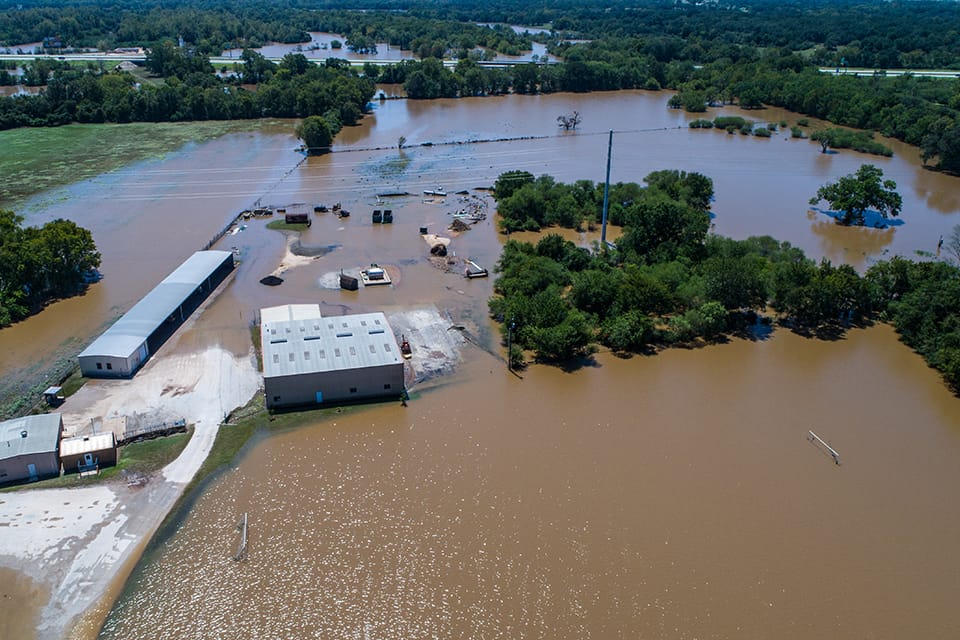
Flood preparedness became one of the most critical challenges during Hurricane Harvey as forecasts warned of catastrophic rainfall and prolonged flooding. In August 2017, Harvey rapidly intensified over the Gulf of Mexico before striking Texas.
Forecasts from the National Hurricane Center were increasingly urgent. Meteorologists warned the storm would stall after landfall and create widespread flooding.
Rainfall projections reached historic levels. Some forecasts predicted more than 35 inches of rain. Consequently, the threat extended far beyond coastal wind damage.
This combination of flooding, stalled movement, and rapid intensification created a high-consequence disaster scenario. Infrastructure, emergency systems, and communities would soon face extreme pressure.
Flood Preparedness and Decision-Making Under Uncertainty
As Hurricane Harvey approached Texas, leaders faced difficult decisions under severe time pressure. Officials understood the risks clearly. However, determining the safest course of action remained difficult.
Evacuation became the central dilemma. Leaving millions in place carried obvious danger. Yet mass evacuation also introduced major risks. Leaders remembered Hurricane Rita in 2005. During that evacuation, highways became gridlocked and fatalities occurred before landfall.
Because of this history, officials hesitated to order a large-scale evacuation. By August 25, Harvey was less than 12 hours away. Transportation limits also constrained available options. Fuel shortages and road capacity reduced flexibility.
As a result, public messaging discouraged mass evacuation. Instead, many residents made decisions independently. Nearly one million people left voluntarily. Meanwhile, millions remained in place.
This created uneven exposure across the population. Some interpreted official messaging as reassurance. Others acted based on personal risk assessment.
For safety professionals, this moment highlights a critical lesson. Flood preparedness requires predefined decision triggers before options narrow.
Uneven Preparedness Across Communities
Preparedness varied significantly across sectors and communities. Some organizations acted decisively using predefined emergency protocols. Others delayed action while waiting for more confirmation.
Healthcare providers demonstrated strong flood preparedness planning. Hospitals relocated vulnerable patients before conditions worsened. Critically ill infants and nursing home residents were evacuated inland. These actions required coordination, planning, and early decision-making.
Similarly, offshore oil and gas companies activated shutdown procedures quickly. Workers evacuated exposed facilities based on clear thresholds. These organizations succeeded because decisions relied on established criteria, not debate. However, public response remained inconsistent. Many Houston residents relied on flood maps and prior experience.
For some neighborhoods, those maps suggested limited flood risk. Yet Harvey flooded areas that had never flooded before. Nearly 78% of drowning fatalities occurred outside designated flood zones. Therefore, mapped risk failed to represent actual exposure. This gap became more dangerous as Harvey stalled. Continuous rainfall overwhelmed drainage systems, rivers, and bayous.
As flooding spread, residents faced rapidly changing conditions. Without universal directives, individuals interpreted risk differently. Consequently, flood preparedness varied based on resources, awareness, and personal judgment.
When the Hazard Exceeds the Plan
Hurricane Harvey quickly exceeded planning assumptions. Initial forecasts already projected dangerous rainfall totals. However, actual conditions became even more severe. Some areas received more than 60 inches of rain over several days. This overwhelmed systems designed for historical rainfall patterns.
Drainage systems, reservoirs, and bayous failed under pressure. Water entered neighborhoods previously considered low risk. This exposed a critical challenge for flood preparedness. Organizations often plan for probable scenarios instead of extreme possibilities.
Emergency response systems also became strained. Roads turned impassable, communications weakened, and rescue demands increased rapidly. More than 17,000 water rescues occurred during the disaster. Many were conducted by ordinary citizens.
Although these rescues demonstrated community resilience, they also revealed system limitations. Harvey also exposed communication challenges. Forecasts used terms like “historic” and “life-threatening,” yet many residents still underestimated the threat.
This demonstrates another key lesson. Flood preparedness must communicate uncertainty and worst-case conditions clearly.
The Human Cost of Delayed Action
The human impact of Hurricane Harvey became devastating. More than 100 people lost their lives, and over one million were displaced. Many fatalities occurred after landfall as flooding intensified across southeast Texas.
In several cases, individuals attempted late evacuations after conditions worsened. Rising floodwaters quickly trapped vehicles and isolated neighborhoods. One deadly incident involved a family overtaken by floodwater while attempting escape. These tragedies reveal how quickly conditions deteriorate once flooding thresholds are exceeded.
First responders also faced major risks. Emergency personnel operated in dangerous and unpredictable conditions for days. One veteran law enforcement officer died attempting to reach his post through flooded roads. At the same time, response capacity became overwhelmed. Thousands of rescues depended on volunteers using personal boats and equipment. While these actions saved lives, they also reflected preparedness gaps.
When formal systems exceed capacity, responsibility shifts to uncoordinated individuals operating without protection or training. For safety leaders, this highlights an uncomfortable reality. Delayed action increases dependence on improvisation during crisis.
What Flood Preparedness Requires from Safety Leaders
Hurricane Harvey reinforced several critical lessons for safety professionals.
First, flood preparedness requires early action. Waiting for certainty reduces available options significantly. Clear decision triggers tied to reliable forecasting data are essential. These triggers allow organizations to act before conditions worsen.
Second, organizations must plan for worst-case conditions. Harvey demonstrated how rapidly hazards exceed expected thresholds. Preparedness plans should stress-test infrastructure, staffing, and response systems against extreme scenarios.
Third, risk models must evolve continuously. Historical flood maps alone are no longer sufficient. Changing weather patterns and aging infrastructure create new vulnerabilities. Therefore, organizations need updated risk assessments regularly.
Fourth, organizations must practice decision-making, not only procedures. Real emergencies rarely follow checklists perfectly. Leaders must make difficult judgments under uncertainty. Scenario-based exercises improve adaptability and confidence during crisis conditions.
Finally, flood preparedness must become part of organizational culture. Preparedness cannot exist only in policies or documentation. Instead, it must shape how people interpret and respond to risk.
When credible warnings emerge, organizations should respond consistently and quickly.
Why Flood Preparedness Depends on Leadership
Leadership plays a central role during emerging disasters. The earliest decisions often carry the greatest consequences. However, those decisions also involve uncertainty and competing risks.
Leaders must balance evacuation challenges, infrastructure limitations, and public safety concerns simultaneously. This requires training, alignment, and confidence in decision-making frameworks. Hesitation narrows available options rapidly. In contrast, decisive action preserves flexibility and reduces risk exposure.
Organizations that performed effectively during Harvey relied on predefined systems and shared expectations. Where those systems were absent, confusion and delays increased vulnerability. Therefore, flood preparedness depends as much on leadership culture as technical planning.
Conclusion
Hurricane Harvey did not arrive without warning. Forecasts clearly communicated the potential for catastrophic flooding and widespread disruption. However, Harvey revealed the gap between risk awareness and coordinated action.
For safety professionals, this gap remains the most important lesson. Flood preparedness requires more than forecasts, plans, or historical models. It requires systems that transform information into decisive action. Severe weather events will continue challenging infrastructure, leadership, and emergency response systems.
Organizations that succeed will treat preparedness as a living process. They will update plans, test assumptions, and act before conditions become uncontrollable.
Ultimately, flood preparedness protects lives only when warnings lead directly to action. That connection between information and execution determines resilience long before floodwaters rise.
About the Author
James A. Junkin, MS, CSP, MSP, SMS, ASP, CSHO is the chief executive officer of Mariner-Gulf Consulting & Services, LLC and the chair of the Veriforce Strategic Advisory Board and the past chair of Professional Safety journal’s editorial review board. James is a member of the Advisory Board for the National Association of Safety Professionals (NASP). He is Columbia Southern University’s 2022 Safety Professional of the Year (Runner Up), a 2023 recipient of the National Association of Environmental Management’s (NAEM) 30 over 30 Award for excellence in the practice of occupational safety and health and sustainability, and the American Society of Safety Professionals (ASSP) 2024 Safety Professional of the Year for Training and Communications, and the recipient of the ASSP 2023-2024 Charles V. Culberson award. He is a much sought after master trainer, keynote speaker, podcaster of The Risk Matrix, and author of numerous articles concerning occupational safety and health. He is a proud veteran of the United States Navy and a strong advocate for veteran causes.