

Wildfire Smoke Protection for Today’s Workforce
Posted on: July 21, 2026 in General Industry
By: James Junkin
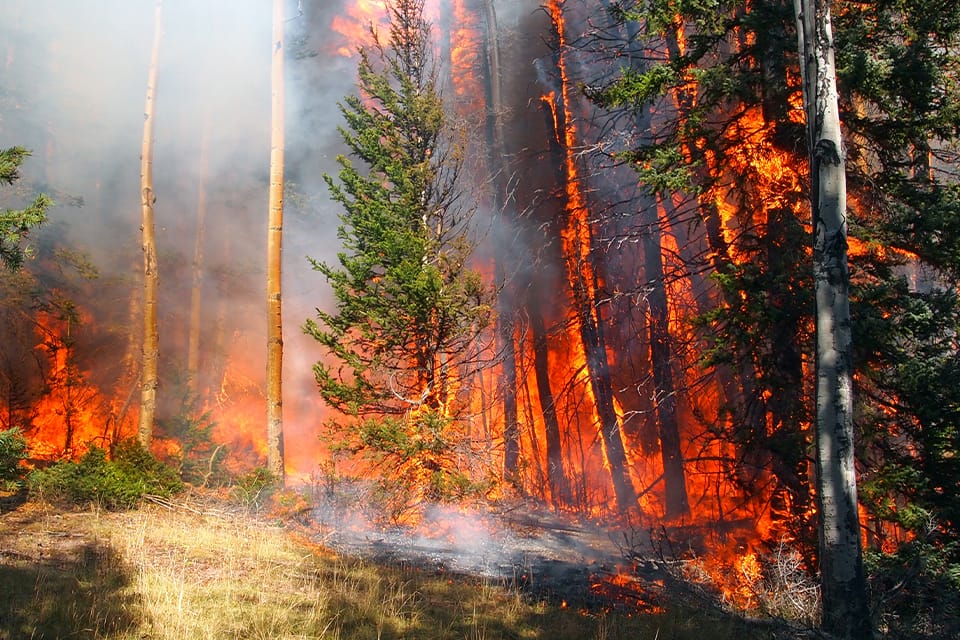
Wildfire smoke is no longer a regional concern and has become a nationwide occupational health risk for employers.
For decades, wildfires were viewed primarily as hazards affecting western states such as California, Oregon, Washington, Idaho, and Montana. That perception has changed dramatically. Today, wildfire smoke affects workers across the United States as larger, longer-lasting fires generate smoke that travels hundreds or even thousands of miles.
Communities throughout the Midwest, Gulf Coast, Northeast, and Southeast have experienced unhealthy air quality during recent fire seasons. As a result, employers across multiple industries now face the challenge of protecting workers from airborne contaminants. Outdoor workers, utility crews, oil and gas contractors, construction personnel, agricultural employees, transportation workers, and emergency responders may all be exposed, regardless of their location.
The primary health concern is fine particulate matter known as PM2.5. These microscopic particles penetrate deep into the lungs and bloodstream, increasing the risk of respiratory and cardiovascular disease. Consequently, employers should recognize wildfire smoke as a significant workplace hazard requiring proactive planning.
Why Wildfire Smoke Demands Employer Action
Exposure to PM2.5 can cause coughing, wheezing, throat irritation, chest tightness, headaches, and reduced lung function. Existing conditions such as asthma, COPD, and heart disease may also worsen. Furthermore, workers performing physically demanding tasks outdoors inhale greater amounts of particulate matter because of increased breathing rates.
Climate change, prolonged drought, rising temperatures, expanding development, and increased vegetation have created conditions that support larger and more destructive fires. By late June 2026, federal agencies reported more than 35,000 wildfires that had burned nearly three million acres nationwide. These numbers were recorded before peak fire season, demonstrating the growing scale of the problem.
Organizations that fail to prepare may experience reduced productivity, increased absenteeism, higher workers’ compensation costs, regulatory scrutiny, and preventable illnesses. Therefore, a written wildfire smoke protection plan should become a standard component of every occupational health and safety management system.
Lessons from the Los Angeles Wildfires
The January 2025 Southern California wildfires demonstrated how rapidly wildfire disasters can affect both communities and workplaces.
Extreme Santa Ana winds, prolonged drought, low humidity, and dry vegetation fueled explosive fire growth throughout Los Angeles County. More than 200,000 residents received evacuation orders or warnings as neighborhoods, businesses, utilities, and transportation systems suffered widespread damage. The economic impacts extended far beyond the immediate burn areas.
The Eaton Fire and Palisades Fire became two of California’s most destructive wildfires. Together, they burned more than 37,000 acres, destroyed over 16,000 structures, claimed at least 31 lives, and caused billions of dollars in damage. Researchers also linked hundreds of additional deaths to wildfire smoke exposure and related environmental conditions.
The Eaton Fire
The Eaton Fire ignited on January 7, 2025, near Altadena, California. Driven by powerful Santa Ana winds and drought-stricken vegetation, the fire spread rapidly into surrounding communities. By January 31, it had burned more than 14,000 acres and become one of California’s most destructive fires. Thousands of residents evacuated with little warning while emergency responders worked under dangerous conditions.
Approximately 9,400 structures were destroyed and more than 1,000 were damaged. Investigators later concluded that electrical transmission equipment operated by Southern California Edison likely caused the fire. The investigation highlighted the relationship between infrastructure resilience, environmental conditions, and wildfire risk.
The Palisades Fire
The Palisades Fire also began on January 7, 2025, in Los Angeles County. Like the Eaton Fire, dry vegetation and severe winds contributed to rapid fire growth. Nearly 105,000 residents evacuated while firefighters battled challenging terrain and shifting conditions. Ultimately, the fire burned more than 23,000 acres before containment.
More than 6,800 structures were destroyed, and nearly 1,000 sustained damage. Investigators later suggested the fire may have originated from the rekindling of an earlier blaze. Regardless of the legal outcome, the incident demonstrated how quickly small ignition events can become catastrophic disasters.
Wildfire Smoke Risks Continue to Grow
Wildfire activity remained elevated throughout 2026. By late June, more than 35,000 fires had burned nearly three million acres across the United States. Large fires affected states including Utah, Arizona, New Mexico, Florida, Alaska, Texas, Georgia, and the Carolinas. These trends suggest wildfire seasons are becoming longer and less predictable.
Consequently, wildfire smoke is no longer a California-specific issue. Organizations nationwide should evaluate smoke exposure as part of enterprise risk management and occupational health planning.
OSHA and CAL/OSHA Expectations
Federal OSHA recognizes wildfire smoke as a serious occupational hazard. Under OSHA’s General Duty Clause, employers must provide workplaces free from recognized hazards likely to cause serious injury or death. When smoke creates unhealthy conditions, employers should assess hazards, implement controls, communicate risks, and reduce employee exposure.
OSHA recommends monitoring air quality, modifying work schedules, reducing strenuous outdoor activities, increasing access to filtered air, and providing respiratory protection when necessary. Employees with respiratory or cardiovascular conditions deserve additional consideration because they face greater health risks.
California’s wildfire smoke regulation establishes even more specific requirements. Employers must implement protective measures when PM2.5 reaches an Air Quality Index of 151 or higher. These measures include hazard communication, engineering controls, administrative controls, employee training, and respirator availability.
Building a Written Wildfire Smoke Protection Plan
Every organization with outdoor employees should establish a written wildfire smoke protection program. The program should clearly identify covered employees, define exposure thresholds, establish implementation triggers, and outline responsibilities. Management, supervisors, safety professionals, and employees all play essential roles in protecting worker health.
Air quality monitoring should be one of the program’s core elements. Employers should identify reliable information sources such as AirNow, the U.S. Forest Service, state agencies, and local air districts. Monitoring procedures should specify frequencies, documentation requirements, and protective action thresholds.
The program should also establish engineering and administrative controls. These may include relocating employees indoors, using filtered vehicles, adjusting schedules, reducing physical exertion, increasing rest periods, or postponing outdoor work. Planning these actions before smoke events allows faster implementation.
Communication procedures are equally important. Workers should receive timely updates about AQI conditions, protective measures, and available resources. Communication should also encourage employees to report symptoms or worsening conditions without fear of retaliation.
Respiratory protection requirements must be fully documented. NIOSH-approved N95 respirators remain the minimum recommended protection against smoke particulates when engineering controls cannot adequately reduce exposure. Employees should also receive training on proper fit, limitations, maintenance, and replacement.
Medical response procedures should explain how to recognize symptoms requiring immediate evaluation. Difficulty breathing, chest pain, severe coughing, dizziness, and asthma attacks all require prompt medical attention. Organizations should establish emergency procedures before wildfire season begins.
Finally, comprehensive training transforms written policies into effective operational programs. Employees should understand PM2.5 health effects, AQI interpretation, exposure controls, respiratory protection, reporting expectations, and emergency procedures. Regular refresher training helps maintain readiness throughout changing wildfire seasons.
Conclusion
Wildfire smoke has become a nationwide occupational health concern rather than a regional environmental issue.
As wildfire frequency and intensity continue to increase, employers must prepare workers for smoke exposure wherever they operate. A comprehensive written protection program strengthens regulatory compliance while reducing illness, lost productivity, and operational disruption.
Ultimately, organizations that monitor air quality, communicate hazards effectively, implement practical controls, and train employees will be better positioned to protect their workforce. Proactive planning is no longer optional. It is an essential component of modern occupational health and safety management.
About the Author
James A. Junkin, MS, CSP, MSP, SMS, ASP, CSHO is the chief executive officer of Mariner-Gulf Consulting & Services, LLC and the chair of the Veriforce Strategic Advisory Board and the past chair of Professional Safety journal’s editorial review board. James is a member of the Advisory Board for the National Association of Safety Professionals (NASP). He is Columbia Southern University’s 2022 Safety Professional of the Year (Runner Up), a 2023 recipient of the National Association of Environmental Management’s (NAEM) 30 over 30 Award for excellence in the practice of occupational safety and health and sustainability, and the American Society of Safety Professionals (ASSP) 2024 Safety Professional of the Year for Training and Communications, and the recipient of the ASSP 2023-2024 Charles V. Culberson award. He is a much sought after master trainer, keynote speaker, podcaster of The Risk Matrix, and author of numerous articles concerning occupational safety and health. He is a proud veteran of the United States Navy and a strong advocate for veteran causes.
References
California Department of Forestry and Fire Protection. (2026-a). Eaton Fire incident information. https://www.fire.ca.gov/incidents/2025/1/7/eaton-fire
California Department of Forestry and Fire Protection. (2026-b). Palisades Fire incident information. https://www.fire.ca.gov/incidents/2025/1/7/palisades-fire
Los Angeles County. (2025). Fact sheet: Key facts about the Eaton and Palisades Fires. https://file.lacounty.gov/SDSInter/lac/1199046_Eaton_Palisades_Fires_Anniversary_Fact_Sheet.pdf
Mariner-Gulf Consulting & Services, LLC. (2026). Protection from wildfire smoke (company wildfire smoke protection program document). https://marinergulf.veriforcenetwork.com/product/protection-from-wildfire-smoke/
National Interagency Fire Center. (2026-a). National fire news. https://www.nifc.gov/fire-information/nfn
National Interagency Fire Center. (2026-b). Statistics. https://www.nifc.gov/fire-information/statistics
National Oceanic and Atmospheric Administration. (2026). U.S. wildfires. https://www.ncei.noaa.gov/access/monitoring/wildfires
Occupational Safety and Health Administration. (2025). Wildfires. https://www.osha.gov/wildfires