OSHA’s Top 10 Violations for 2026: Audit Yourself Before OSHA Does | Risk Matrix Episode 159
THE RISK MATRIX Cutting-edge podcast on occupational safety and risk management. Hosted by industry titans: JAMES JUNKIN, MS, CSP, MSP,…

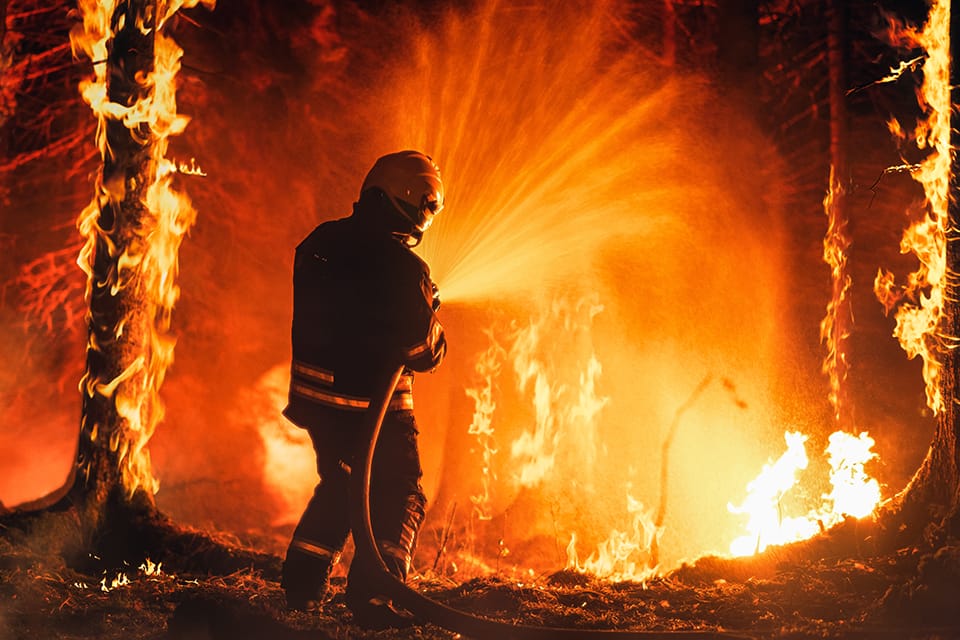
Fort McMurray remains one of the most important case studies in wildfire emergency preparedness and large-scale disaster response. In May 2016, this Canadian community faced a wildfire of historic scale.
The fire, known as the Horse River Fire or “The Beast,” escalated rapidly. Within days, it forced 88,000 people to evacuate. It also caused billions in damage and disrupted national energy production.
For safety professionals, Fort McMurray offers critical lessons. It shows how extreme conditions can overwhelm even well-prepared systems.
Fort McMurray was not an unprepared community. Emergency plans existed, and responders were trained. However, environmental conditions exceeded expectations.
Extreme heat, low humidity, and strong winds created ideal fire conditions. As a result, the wildfire spread faster than anticipated.
This event highlights a key reality. When hazards evolve faster than plans, response becomes improvisation. Therefore, preparedness must account for worst-case scenarios.
The wildfire began on May 1, 2016, southwest of Fort McMurray. It started in dense boreal forest with highly flammable fuels. Although response efforts began quickly, conditions favored rapid spread. Within 48 hours, the fire expanded dramatically.
By May 3, it reached the urban interface. Embers ignited structures far ahead of the main fire. Consequently, entire neighborhoods caught fire simultaneously.
Firefighters faced a new challenge. Wildland suppression shifted to urban firefighting. This required different tactics and priorities. However, fire behavior remained unpredictable. Aircraft were grounded at times due to smoke. Meanwhile, ground crews faced extreme danger.
Soon after, a full evacuation was ordered. Fort McMurray entered a provincial state of emergency.
The evacuation of Fort McMurray was one of Canada’s largest. It escalated from targeted movement to full evacuation within hours. Highway 63 became the main evacuation route. Thousands fled as flames approached the roadway. Visibility dropped due to heavy smoke.
Traffic congestion created additional risk. Some vehicles ran out of fuel or broke down. As a result, responders and civilians improvised assistance. At one point, evacuation routes were cut off. Therefore, thousands were redirected north to oil sands camps.
These camps were not designed for civilian shelter. However, they became temporary safe zones. Later, evacuees were airlifted to safer areas. Despite extreme conditions, no direct fire-related fatalities occurred. However, this outcome depended on narrow margins and rapid decisions.
The destruction in Fort McMurray was severe. Approximately 2,400 structures were destroyed. Entire neighborhoods became uninhabitable. Infrastructure also suffered major damage. Electrical systems and communication networks were disrupted. Consequently, recovery efforts became more difficult.
Economic losses exceeded $9 billion. However, indirect impacts were also significant. These included lost wages, business closures, and service disruptions. Social impacts were equally serious. Many residents faced long-term displacement. Additionally, mental health challenges increased.
Studies later showed higher rates of anxiety and stress. Therefore, disaster impact extends beyond physical damage.
Fort McMurray is closely tied to Canada’s oil sands industry. The wildfire disrupted nearly one million barrels of oil production daily. Major operators halted or reduced operations. Thousands of workers were evacuated from industrial sites.
Although infrastructure damage was limited, operations suffered. Workforce displacement and poor air quality slowed recovery.
This event revealed a key lesson. Industrial resilience depends on community stability. When workers are displaced, operations cannot resume quickly.
The exact cause of the fire remains uncertain. However, conditions leading to its growth are well understood. The preceding winter was unusually warm and dry. As a result, snowpack was low. This left fuels dry early in the season.
Spring temperatures were also high. Some days exceeded 30 degrees Celsius. Consequently, fuel moisture dropped further. Wind played a major role. Strong gusts drove rapid fire spread. They also carried embers long distances.
Additionally, urban development increased exposure. Homes were built near fire-prone areas. Therefore, risk was amplified.
These factors show a critical point. Wildfires are not isolated events. They are influenced by long-term environmental and planning decisions.
Recovery after Fort McMurray took years. Many workers returned to damaged homes or temporary housing. This displacement affected productivity and retention. Employees faced ongoing uncertainty and disruption.
Mental health also became a major concern. Many evacuees experienced stress and trauma. These effects lasted long after the fire. Employers faced new challenges. They needed to support workers beyond the workplace. Flexible policies and mental health support became essential.
Additionally, traditional business continuity plans proved limited. Many focused on assets, not people. Therefore, they failed to address workforce needs.
This event showed the importance of integrated planning. Safety, HR, and operations must work together.
The lessons from Fort McMurray are clear and practical. First, preparedness must reflect extreme scenarios, not average conditions.
Second, evacuation plans must be flexible. Routes may fail, and conditions may change quickly. Therefore, contingency planning is critical.
Third, communication systems must be reliable. Workers and residents need clear instructions during emergencies.
Fourth, organizations must prioritize people. Infrastructure can be rebuilt, but workforce stability takes longer to restore.
Finally, preparedness must begin early. Waiting for certainty can delay action. In fast-moving disasters, delays increase risk.
Fort McMurray remains relevant today. Climate conditions are increasing wildfire intensity and frequency. As a result, similar events are likely. Organizations must adapt their planning strategies.
Preparedness should not rely on past experience alone. Instead, it must consider future risk scenarios. This requires investment in training, infrastructure, and leadership. It also requires a willingness to act early.
The Fort McMurray wildfire was not an unpredictable event. Instead, it was a convergence of known risks and extreme conditions. The evacuation success reflects strong response efforts. However, it also highlights how close the system came to failure.
For safety professionals, the message is clear. Preparedness must evolve with risk.
Fort McMurray demonstrates that safety depends on planning, flexibility, and decisive action. Ultimately, the true test of preparedness occurs when conditions exceed expectations.
James A. Junkin, MS, CSP, MSP, SMS, ASP, CSHO is the chief executive officer of Mariner-Gulf Consulting & Services, LLC and the chair of the Veriforce Strategic Advisory Board and the past chair of Professional Safety journal’s editorial review board. James is a member of the Advisory Board for the National Association of Safety Professionals (NASP). He is Columbia Southern University’s 2022 Safety Professional of the Year (Runner Up), a 2023 recipient of the National Association of Environmental Management’s (NAEM) 30 over 30 Award for excellence in the practice of occupational safety and health and sustainability, and the American Society of Safety Professionals (ASSP) 2024 Safety Professional of the Year for Training and Communications, and the recipient of the ASSP 2023-2024 Charles V. Culberson award. He is a much sought after master trainer, keynote speaker, podcaster of The Risk Matrix, and author of numerous articles concerning occupational safety and health.
References
Belleville, G., Ouellet, M.-C., Lebel, J., Ghosh, S., Morin, C. M., Bouchard, S., & Guay, S. (2021). Psychological symptoms among evacuees from the 2016 Fort McMurray wildfires: A population-based survey one year later. Frontiers in Public Health, 9, Article 655357. https://doi.org/10.3389/fpubh.2021.655357
Canadian Disaster Database. (2016). Fort McMurray (Horse River) wildfire. Public Safety Canada. https://cdd.publicsafety.gc.ca
Climate.gov. (2016). Climate connections to the Fort McMurray fire. National Oceanic and Atmospheric Administration. https://www.climate.gov/news-features/event-tracker/climate-connections-fort-mcmurray-fire
Energy Information Administration. (2016, June 8). Fires near Fort McMurray are reducing Canada’s oil sands production. U.S. Department of Energy. https://www.eia.gov/todayinenergy/detail.php?id=26572
Mamuji, A. A., & Rozdilsky, J. L. (2019). Wildfire as an increasingly common natural disaster facing Canada: Understanding the 2016 Fort McMurray wildfire. Natural Hazards, 98(1), 163–180. https://doi.org/10.1007/s11069-018-3488-4
Public Safety Canada. (2016). After-action overview: Fort McMurray wildfire response and recovery. https://www.documentcloud.org/documents/24394571-2019-08-a-2019-00071-public-safety-canada/

THE RISK MATRIX Cutting-edge podcast on occupational safety and risk management. Hosted by industry titans: JAMES JUNKIN, MS, CSP, MSP,…

THE RISK MATRIX Cutting-edge podcast on occupational safety and risk management. Hosted by industry titans: JAMES JUNKIN, MS, CSP, MSP,…
We’ll send you practical and insightful supply chain risk management info that can benefit your business. Plus, important company updates that keep you in the loop.