
OSHA’s Top 10 Violations for 2026: Audit Yourself Before OSHA Does | Risk Matrix Episode 159
THE RISK MATRIX Cutting-edge podcast on occupational safety and risk management. Hosted by industry titans: JAMES JUNKIN, MS, CSP, MSP,…

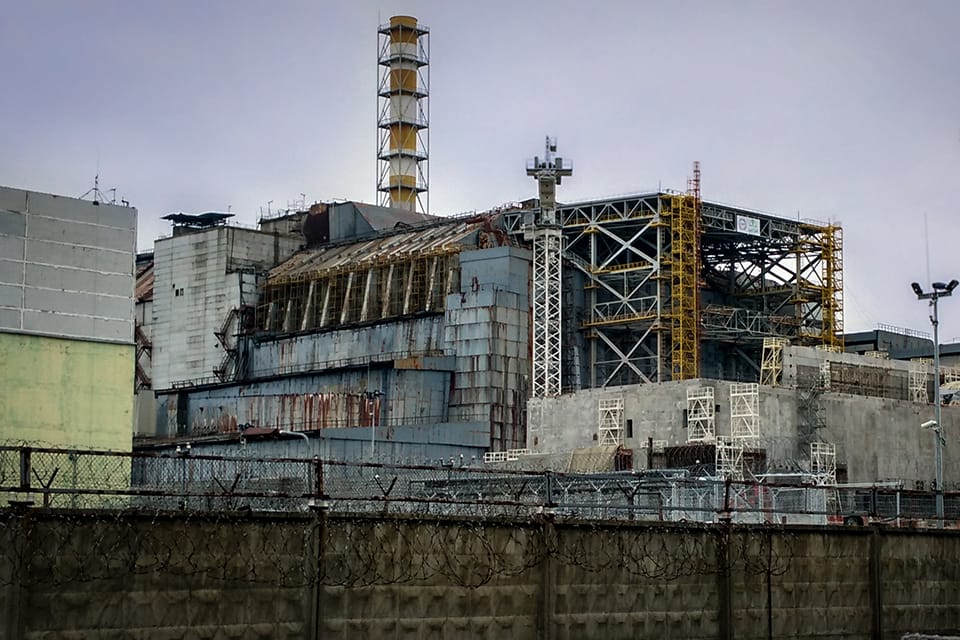
Industrial warfare is reshaping how environmental disasters emerge during modern conflict, especially when critical infrastructure becomes a military target. Nearly four decades after Chernobyl, Europe faces a new form of industrial fallout.
This time, the contaminant is not radiation. Instead, petrochemical smoke, soot, and oil are released during wartime attacks.
The comparison to Chernobyl is not about scale. Rather, it is about how industrial system failure spreads harm beyond borders.
The 1986 Chernobyl disaster revealed how industrial failure can contaminate ecosystems far beyond the source. Radioactive fallout traveled across Europe through wind and rain. As a result, contamination ignored borders and political boundaries.
Today, industrial warfare is producing similar environmental consequences. Ukrainian strikes on Russian oil infrastructure have triggered refinery fires and widespread pollution. When oil storage tanks ignite, smoke rises high into the atmosphere. Winds then carry pollutants across surrounding regions.
Like radioactive fallout, petrochemical contamination settles unpredictably. Therefore, civilians far from combat zones still experience exposure. This demonstrates a critical lesson. Industrial warfare transforms infrastructure failure into regional environmental risk.
Refinery fires create atmospheric and ecological hazards quickly. Smoke plumes contain particulate matter, hydrocarbons, and toxic chemicals. These pollutants spread through air currents and rainfall. Consequently, contamination reaches rivers, coastlines, and populated areas.
Oil spills entering waterways behave similarly to industrial fallout after Chernobyl. Contaminants disperse, settle into sediment, and persist for years. The Black Sea has become both a reservoir and amplifier of pollution. Over time, contamination accumulates throughout the ecosystem.
Additionally, petrochemical smoke creates long-term health risks. Fine particulate matter penetrates deep into lung tissue and bloodstream systems. Volatile organic compounds can also remain in the body long after exposure ends. Therefore, the health consequences extend beyond the initial fires.
Ukraine’s strikes on Russian oil infrastructure were strategic, not spontaneous. The campaign targeted energy systems supporting Russia’s war economy. Officials described the attacks as economic warfare. The goal was to reduce export capacity and increase wartime costs.
Industrial warfare increasingly targets economic infrastructure rather than frontline troops. As a result, refineries and fuel systems become critical military objectives. The attacks reached deep into Russian territory. Facilities in the Baltic and Black Sea regions were struck repeatedly. This created strategic uncertainty and stretched Russian air defenses. Additionally, repeated attacks overwhelmed industrial containment systems.
The Tuapse refinery became one of the most significant targets. Between April and May, the facility was struck multiple times. Storage tanks ignited repeatedly before earlier fires were extinguished. Consequently, emergency crews faced prolonged and exhausting response operations.
Satellite imagery confirmed continuing thermal hotspots for days. Because of this, the damage extended far beyond symbolic disruption.
The environmental impact emerged rapidly downstream and downwind from refinery fires. Fuel oil escaped containment systems and entered nearby waterways. From there, contamination spread into the Black Sea. This mirrors how radioactive material spread after Chernobyl. In both cases, natural systems became pathways for contamination.
Satellite imagery documented oil slicks stretching across coastal regions. Meanwhile, cleanup crews struggled to contain the spread. However, dissolved hydrocarbons and micro-residues cannot be fully removed. Like radioactive particles, they persist in ecosystems for years.
Industrial warfare creates contamination that outlasts the immediate conflict. Therefore, environmental damage becomes a long-term public burden.
The greatest danger was often not fire itself, but smoke exposure. Petroleum fires release sulfur compounds, carbon monoxide, and particulate matter. These pollutants spread rapidly across populated areas.
Residents near Tuapse reported respiratory irritation and poor visibility. Additionally, many described “black rain” falling onto streets and homes.
This phenomenon resembled radioactive deposition after Chernobyl. Pollutants returned to the ground through rainfall and atmospheric circulation. Fine particulate matter, especially PM2.5, presents serious health risks. These particles bypass natural lung defenses and enter the bloodstream.
Short-term exposure causes headaches, nausea, and respiratory problems. However, repeated exposure creates chronic health risks over time.
Industrial warfare therefore creates diffuse public health consequences. Unlike explosions, smoke exposure spreads continuously and often invisibly.
Ecological damage followed quickly after the refinery strikes. Oil-coated birds lost the ability to fly and regulate temperature. Fish kills also appeared near contaminated waterways. Volunteers created wildlife decontamination centers to support affected animals. However, ecological damage spread faster than response efforts.
Although petrochemical contamination differs from radiation, it still disrupts ecosystems severely. Food chains, reproduction, and habitat stability all suffer.
The Black Sea region already faced environmental stress before the attacks. Consequently, industrial warfare compounded existing vulnerabilities.
This reflects another lesson from Chernobyl. Environmental harm often becomes cumulative and long-lasting.
Under international humanitarian law, attacks on military objectives are not automatically unlawful. Oil refineries and fuel systems contribute directly to military operations. Therefore, they may qualify as lawful military targets.
However, legal analysis does not eliminate environmental consequences. International law requires distinction and proportionality during attacks. Civilian harm must not be excessive compared to military advantage.
Yet environmental contamination creates a difficult ethical challenge. Smoke, oil, and pollution spread beyond the intended target area.
Industrial warfare therefore exposes a legal gap. Existing laws regulate military conduct but address environmental fallout imperfectly. This creates tension between military necessity and humanitarian consequences.
The health consequences of refinery fires may continue for years. Smoke exposure increases risks for asthma, cardiovascular illness, and lung disease. Vulnerable populations face even greater danger.
Children, older adults, and individuals with health conditions are especially affected. Even temporary exposure can create lasting impacts.
Additionally, contamination affects water systems and food sources. Therefore, exposure pathways continue after fires are extinguished.
This parallels the long-term effects observed after Chernobyl. The true damage often emerges slowly over decades. Industrial warfare produces environmental risks that extend beyond the battlefield timeline.
Industrial warfare demonstrates how interconnected infrastructure systems have become.
Modern refineries, pipelines, and energy systems support both economies and military operations. However, their destruction creates broad civilian consequences. The smoke from refinery fires does not remain localized. Instead, it spreads across regions through natural environmental systems.
This makes industrial warfare a transboundary issue. Communities far removed from combat still absorb environmental and health impacts. The refinery strikes reinforce a critical lesson. Infrastructure systems were never designed to fail safely under deliberate attack.
The refinery fires along Russia’s Black Sea coast will eventually end. However, the environmental contamination may persist for years.
Industrial warfare highlights the vulnerability of modern infrastructure systems during conflict. Once containment fails, pollution spreads beyond political and military boundaries. Like Chernobyl, the true cost may emerge gradually through chronic exposure and ecosystem damage.
International law may permit attacks on industrial targets. Nevertheless, civilians still bear the environmental consequences.
Ultimately, industrial warfare transforms infrastructure into a source of regional fallout. The environment becomes the carrier of harm, while civilians inherit the residue long after conflict shifts elsewhere.
James A. Junkin, MS, CSP, MSP, SMS, ASP, CSHO is the chief executive officer of Mariner-Gulf Consulting & Services, LLC and the chair of the Veriforce Strategic Advisory Board and the past chair of Professional Safety journal’s editorial review board. James is a member of the Advisory Board for the National Association of Safety Professionals (NASP). He is Columbia Southern University’s 2022 Safety Professional of the Year (Runner Up), a 2023 recipient of the National Association of Environmental Management’s (NAEM) 30 over 30 Award for excellence in the practice of occupational safety and health and sustainability, and the American Society of Safety Professionals (ASSP) 2024 Safety Professional of the Year for Training and Communications, and the recipient of the ASSP 2023-2024 Charles V. Culberson award. He is a much sought after master trainer, keynote speaker, podcaster of The Risk Matrix, and author of numerous articles concerning occupational safety and health. He is a proud veteran of the United States Navy and a strong advocate for veteran causes.

THE RISK MATRIX Cutting-edge podcast on occupational safety and risk management. Hosted by industry titans: JAMES JUNKIN, MS, CSP, MSP,…

THE RISK MATRIX Cutting-edge podcast on occupational safety and risk management. Hosted by industry titans: JAMES JUNKIN, MS, CSP, MSP,…
We’ll send you practical and insightful supply chain risk management info that can benefit your business. Plus, important company updates that keep you in the loop.