
OSHA’s Top 10 Violations for 2026: Audit Yourself Before OSHA Does | Risk Matrix Episode 159
THE RISK MATRIX Cutting-edge podcast on occupational safety and risk management. Hosted by industry titans: JAMES JUNKIN, MS, CSP, MSP,…

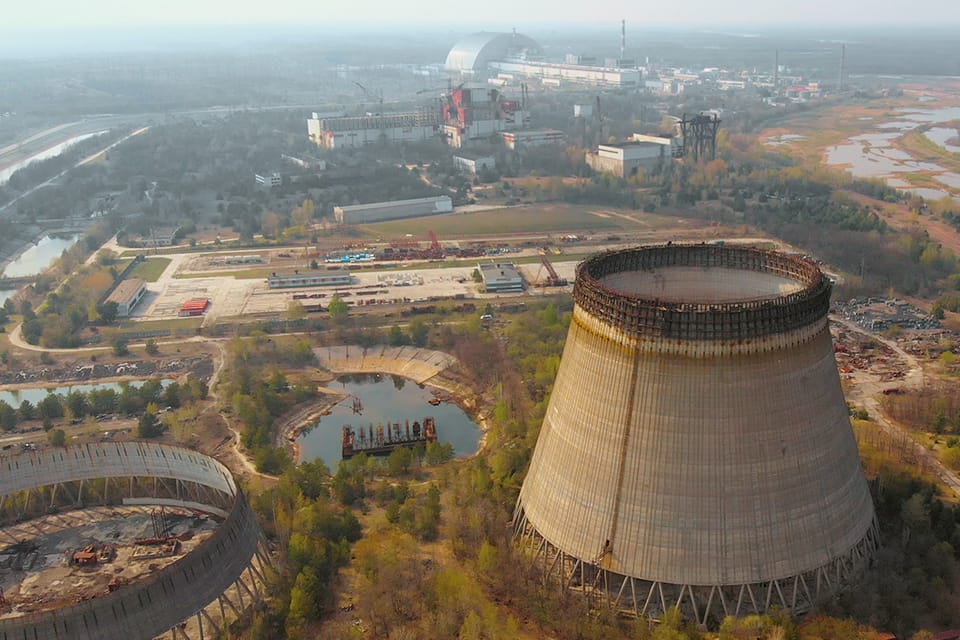
Nuclear safety remains one of the most critical priorities for modern safety and crisis management professionals. Nearly forty years after the Chernobyl disaster, its lessons still shape how organizations manage risk, leadership, and emergency response.
The Chernobyl Nuclear Power Plant symbolized Soviet technological ambition. It was built in the 1970s to meet rising energy demands. At the same time, it showcased industrial strength and self-sufficiency.
The nearby city of Pripyat supported this vision. It offered modern housing, schools, and cultural facilities. As a result, it became a desirable place to live.
At the core were RBMK-1000 reactors. These reactors were efficient and economical. However, they had serious design risks. For example, they had a positive void coefficient, which could increase reactivity under certain conditions.
Moreover, the reactors lacked a robust containment structure. This decision prioritized cost and scale over worst-case planning. Consequently, the system depended heavily on operational control.
Oversight was fragmented across multiple agencies. Therefore, accountability was limited. At the same time, safety culture focused on compliance and production, not critical thinking.
Operators followed procedures carefully. However, they lacked deep knowledge of reactor physics during abnormal situations. This gap created hidden risks that later contributed to disaster.
The accident began during a safety test. The goal was to determine whether turbine energy could power cooling systems during outages.
Although the goal was valid, execution was flawed. Delays caused the reactor to remain at low power too long. As a result, xenon poisoning occurred, destabilizing the reactor.
Operators responded by withdrawing control rods beyond safe limits. At the same time, they disabled safety systems to continue the test. Consequently, the reactor entered a dangerous and unstable state.
When operators initiated an emergency shutdown, a design flaw triggered a power surge. Within seconds, the reactor exploded. Therefore, a routine test became a catastrophic failure.
Immediately after the explosion, responders acted with bravery. However, they lacked critical information. Firefighters believed they were handling a normal fire.
They worked without protective equipment. As a result, many received fatal radiation exposure. Nevertheless, their actions prevented further reactor damage.
Inside the plant, confusion slowed response efforts. Managers assumed the reactor was intact. Meanwhile, monitoring systems failed to provide accurate data.
Hospitals were also unprepared. Patients were transported to specialized facilities in Moscow. However, doctors faced unprecedented medical challenges.
Although the heroism was real, it came at a high cost. Ultimately, institutional failure placed individuals in lethal situations.
Authorities delayed evacuating Pripyat for 36 hours. During this time, residents continued normal activities. Meanwhile, radiation exposure increased.
This delay reflected uncertainty and political caution. Leaders hesitated to act without full information. Additionally, they wanted to avoid public alarm.
When evacuation began, officials described it as temporary. Residents were told to bring only essentials. However, most never returned.
Logistically, the evacuation was efficient. Over 50,000 people were moved quickly. Yet the delay had already caused unnecessary exposure.
In rural areas, evacuation took even longer. Some residents remained for weeks or months. Consequently, long-term health risks increased.
Chernobyl quickly became an international crisis. Radioactive fallout spread across Europe. In fact, Sweden first detected abnormal radiation levels.
This discovery forced public acknowledgment. Governments then implemented protective measures. For example, they restricted contaminated food supplies.
Environmental impacts were long-lasting. Radiation affected soil, water, and ecosystems. Some areas remain contaminated decades later.
Health effects also emerged over time. Thyroid cancer rates increased among exposed children. Additionally, psychological impacts affected millions.
As a result, global nuclear safety policies changed significantly. International cooperation increased. Nuclear risk became a shared responsibility.
After the explosion, containment became urgent. Authorities built a structure called the sarcophagus. It covered the damaged reactor to limit radiation release.
Hundreds of thousands of workers participated in cleanup. These “liquidators” faced dangerous conditions. Even short exposure periods carried risks.
However, the original structure was not permanent. Over time, it deteriorated. Therefore, a more durable solution was required.
The New Safe Confinement was completed in 2016. This massive structure now covers the reactor. It enables safer long-term dismantling efforts.
Still, cleanup will take decades. Nuclear safety challenges do not end with initial containment. Instead, they require sustained commitment.
The 30-kilometer exclusion zone forced mass relocation. Entire communities were abandoned. As a result, the area became a symbol of long-term disruption.
Over time, wildlife returned. Some species even thrived without human activity. However, radiation effects remain present.
Scientific studies show mixed outcomes. While populations grow, some species show genetic damage. Therefore, recovery is incomplete.
The zone highlights a complex reality. Nature adapts, but damage persists. Nuclear safety failures leave lasting environmental consequences.
Chernobyl demonstrates that disasters rarely stem from a single failure. Instead, they result from interconnected risks. These include technology, culture, and human decisions.
First, organizational culture is critical. At Chernobyl, hierarchy discouraged questioning authority. Therefore, early warning signs were ignored.
Second, transparency is essential. Delayed communication increased harm. In contrast, timely information enables better decision-making.
Third, preparedness must be realistic. Safety systems existed, but they failed in practice. Therefore, training must reflect real-world conditions.
Fourth, cross-disciplinary understanding is necessary. Operators and leaders must share knowledge. This alignment improves situational awareness.
Additionally, time is a critical factor. Delays in action increase consequences. Therefore, leaders must act on concern, not certainty.
Finally, crisis management extends beyond immediate response. Long-term recovery requires ongoing responsibility. Nuclear safety is a continuous obligation, not a one-time task.
Chernobyl remains a defining example of systemic failure. It shows how design flaws, poor culture, and weak communication combine to create disaster.
More importantly, it highlights the importance of nuclear safety in complex systems. Leaders must prioritize transparency, preparedness, and accountability.
Ultimately, the goal is not to rely on heroism. Instead, organizations must prevent situations that require it. Nuclear safety depends on learning from the past and acting before failure occurs.
James A. Junkin, MS, CSP, MSP, SMS, ASP, CSHO is the chief executive officer of Mariner-Gulf Consulting & Services, LLC and the chair of the Veriforce Strategic Advisory Board and the past chair of Professional Safety journal’s editorial review board. James is a member of the Advisory Board for the National Association of Safety Professionals (NASP). He is Columbia Southern University’s 2022 Safety Professional of the Year (Runner Up), a 2023 recipient of the National Association of Environmental Management’s (NAEM) 30 over 30 Award for excellence in the practice of occupational safety and health and sustainability, and the American Society of Safety Professionals (ASSP) 2024 Safety Professional of the Year for Training and Communications, and the recipient of the ASSP 2023-2024 Charles V. Culberson award. He is a much sought after master trainer, keynote speaker, podcaster of The Risk Matrix, and author of numerous articles concerning occupational safety and health.

THE RISK MATRIX Cutting-edge podcast on occupational safety and risk management. Hosted by industry titans: JAMES JUNKIN, MS, CSP, MSP,…
THE RISK MATRIX Cutting-edge podcast on occupational safety and risk management. Hosted by industry titans: JAMES JUNKIN, MS, CSP, MSP,…
We’ll send you practical and insightful supply chain risk management info that can benefit your business. Plus, important company updates that keep you in the loop.