
Hurricane Season 2026: Remembering Katrina and Preparing for What Comes Next
Posted on: June 15, 2026 in General Industry
By: James Junkin
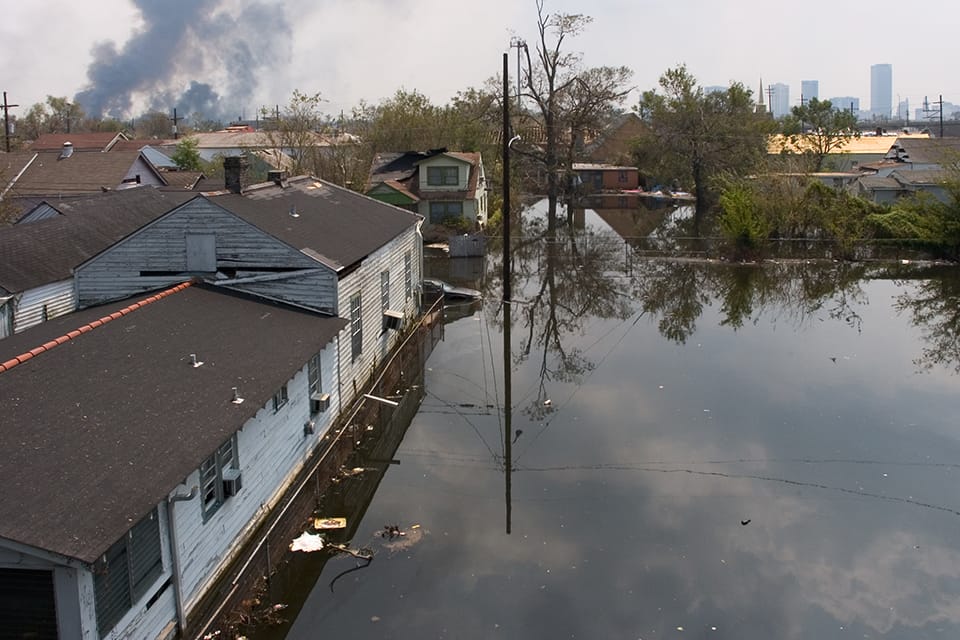
Hurricane season 2026 begins with familiar forecasts, renewed preparation efforts, and memories that many Gulf Coast residents never forget.
Each year, June 1 marks the official start of Atlantic hurricane season. Along the Gulf Coast and throughout the Southeast, that date means more than a calendar milestone. It signals a period of heightened awareness and careful preparation. Forecast models dominate conversations. Emergency kits are checked again. Families revisit plans they hope never to use.
For those who experienced a catastrophic storm firsthand, hurricane season is deeply personal. Memories remain vivid. The wind would not stop. The water would not recede. Systems that were expected to work often failed.
For many survivors, images from Hurricane Katrina remain unforgettable. Spray-painted houses marked with the words “One Dead in the Attic” continue to haunt the public memory. Hurricane Katrina reshaped how many people understand vulnerability, preparedness, and delayed decision-making.
Now, as hurricane season 2026 begins, those memories feel less like history and more like instruction. Forecasting technology has improved. Infrastructure investments have strengthened some protections. However, new challenges continue to emerge.
Population growth along vulnerable coastlines has increased exposure. At the same time, evolving weather patterns and interconnected systems have reduced the margin for error. As a result, hurricane season 2026 is not simply a reminder of past disasters. It is an opportunity to evaluate current preparedness.
The Weight of Katrina’s Legacy
On August 29, 2005, Hurricane Katrina made landfall along the Gulf Coast. The destruction changed communities forever. The storm itself was devastating. However, the cascading failures afterward transformed a natural disaster into a national tragedy.
Levee breaches flooded entire neighborhoods. Communication systems broke down. Emergency response efforts struggled to keep pace with unfolding events. Recovery took years. In some communities, recovery remains incomplete even today. More than 1,800 people lost their lives. Damages exceeded $125 billion.
Yet numbers alone cannot capture the true impact. Behind every statistic was a family, a home, and a life permanently altered. Katrina exposed vulnerabilities that had existed for years. Aging infrastructure, inadequate flood protection, and fragmented emergency planning systems were revealed in real time.
The storm demonstrated a critical lesson. Risk is not determined solely by the hazard itself. It is shaped by the systems designed to manage that hazard. When those systems fail, consequences multiply rapidly.
Significant improvements have been made since 2005. Levee systems have been strengthened. Forecasting capabilities have advanced. Emergency coordination has improved. Nevertheless, Katrina remains a warning against complacency.
Infrastructure can still fail. Plans can still fall short. Extreme conditions can still overwhelm expectations. Today, Katrina continues to influence emergency planning and risk management discussions across the country.
Hurricane Season 2026 and the Lessons of Survival
The most powerful lessons often come from survivors. These stories are not simply accounts of endurance. They provide insight into human behavior under extreme conditions. Many residents sheltered in their homes. They believed those structures would withstand the storm.
In numerous cases, attics became places of last resort. Areas assumed to be safe became deadly traps as floodwaters continued rising. Others escaped to rooftops and waited for rescue. Some remained stranded for days. These experiences highlight an important reality. Assumptions about safety can quickly become liabilities when conditions exceed expectations.
Equally important are the stories of those who wanted to evacuate but could not. Transportation limitations, financial barriers, and uncertainty created obstacles that prevented many from leaving. These challenges remain relevant today.
Effective emergency planning must ensure evacuation is not only possible but practical for everyone. Nearly two decades later, survivors still recall Katrina in remarkable detail. Along the Gulf Coast, many simply refer to it as “The Storm.” The sounds, smells, and emotions remain vivid.
These stories serve an important purpose. They help future generations understand how quickly circumstances can change. They also demonstrate that hesitation, underestimation, and overconfidence remain recurring themes in disaster response.
A New Era of Hurricane Risk
Hurricane season 2026 exists within a different risk environment than Katrina did. Storms have always threatened the Gulf Coast. However, the conditions influencing those storms continue to evolve.
Warmer ocean temperatures contribute to stronger hurricanes. Increased atmospheric moisture creates greater rainfall potential. Consequently, flooding risks continue to increase. Rapid intensification has also become a major concern. Storms can strengthen dramatically within a short period. This reduces the time available for preparation and evacuation.
In some cases, several days of warning have become less than 48 hours. Population growth has further amplified risk. More people now live in vulnerable coastal areas. More infrastructure is exposed to storm surge and flooding. Therefore, even with better forecasting, potential consequences continue to grow.
Industrial operations face additional challenges. Facilities must prepare for power loss, equipment failures, and potential hazardous material releases. These secondary risks can create cascading impacts far beyond the initial storm.
As hurricane season 2026 unfolds, organizations must recognize that hurricanes are not isolated weather events. They are complex incidents capable of disrupting entire systems.
Preparedness in Practice
Preparedness remains the most effective way to reduce hurricane impacts. However, preparedness must extend beyond checklists and theoretical plans.
At the household level, families need clear evacuation routes, communication procedures, and decision triggers. Waiting for certainty often delays action. Therefore, plans should define when decisions will be made.
Emergency supply kits remain essential. However, recent disasters show that disruptions may last weeks rather than days. Preparedness should focus on sustainability as well as immediate response.
Organizations face even greater complexity. Business continuity plans must address workforce safety, operational interruptions, and regulatory requirements. Communication systems should include redundancy. If primary systems fail, alternative methods must remain available.
Regular exercises help identify weaknesses before emergencies occur. These drills also improve decision-making under pressure. Inclusive planning is equally important.
Katrina exposed significant disparities in preparedness and evacuation capability. Modern preparedness efforts must address those gaps. Public agencies, businesses, and community organizations must work together to improve resilience.
From Remembrance to Responsibility
As hurricane season 2026 begins, Katrina risks becoming viewed as distant history. However, the lessons remain highly relevant. Organizations do not possess memory. People do.
When experienced individuals leave, institutional knowledge often disappears with them. Therefore, lessons learned must be documented, shared, and reinforced continuously.
Preparedness is not a one-time effort. It is an ongoing process that evolves with changing conditions. Individuals, organizations, and communities must reassess risks regularly.
Leadership plays a critical role in this effort. Leaders must prioritize preparedness and invest in the resources needed to support it. This includes infrastructure improvements, workforce training, and resilient communication systems.
Education is equally important. Sharing lessons from past disasters helps others avoid similar mistakes. Preparedness knowledge strengthens resilience across entire communities.
Ultimately, responsibility requires a shift in mindset. Hurricanes should not be viewed as unpredictable interruptions. Instead, they should be treated as foreseeable events requiring proactive management. The goal is not merely surviving the next storm. The goal is reducing the likelihood that it becomes a catastrophe.
Conclusion
I still remember the sound. Not only the wind, but the silence that followed. It was a silence that existed only because everything familiar had disappeared. After Hurricane Katrina, time felt different. Days were measured by rescues, receding water, and the realization that life had changed permanently.
That experience never leaves you. It resurfaces every year when hurricane season begins.
Surviving Katrina changes how you see risk. It removes the illusion that preparation is optional. I witnessed systems fail. I watched people make impossible decisions with limited information and diminishing options. At the same time, I witnessed extraordinary resilience. Neighbors helped neighbors. Strangers became lifelines. Communities endured despite overwhelming loss.
As hurricane season 2026 begins, those memories remain powerful reminders. Preparedness is not a checklist. It is a responsibility. The lessons are written in waterlines, empty foundations, and stories shared by survivors. If Katrina taught us anything, it is this: The difference between tragedy and survival is often decided before the storm arrives. It is determined by preparation, communication, and action. We cannot control the storm.
However, we can decide how ready we are when it comes. That is a lesson those who survived Katrina never forget.
About the Author
James A. Junkin, MS, CSP, MSP, SMS, ASP, CSHO is the chief executive officer of Mariner-Gulf Consulting & Services, LLC and the chair of the Veriforce Strategic Advisory Board and the past chair of Professional Safety journal’s editorial review board. James is a member of the Advisory Board for the National Association of Safety Professionals (NASP). He is Columbia Southern University’s 2022 Safety Professional of the Year (Runner Up), a 2023 recipient of the National Association of Environmental Management’s (NAEM) 30 over 30 Award for excellence in the practice of occupational safety and health and sustainability, and the American Society of Safety Professionals (ASSP) 2024 Safety Professional of the Year for Training and Communications, and the recipient of the ASSP 2023-2024 Charles V. Culberson award. He is a much sought after master trainer, keynote speaker, podcaster of The Risk Matrix, and author of numerous articles concerning occupational safety and health. He is a proud veteran of the United States Navy and a strong advocate for veteran causes.