


The Chemical Industry and the EPA’s Smarter, Leaner Approach to Chemical Safety
Posted on: March 26, 2026 in Chemical
By: James Junkin
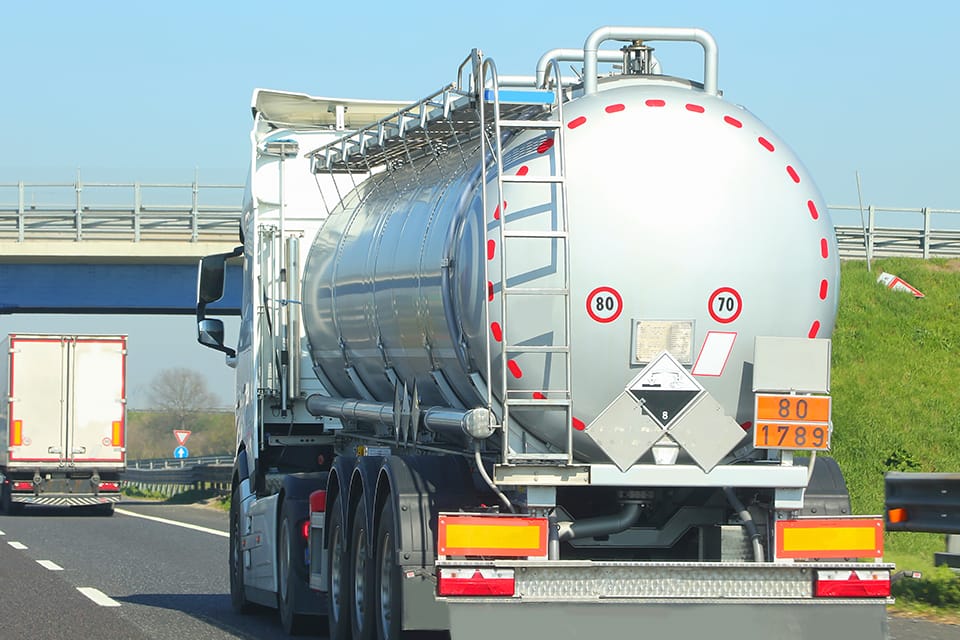
The chemical industry is entering a new phase as the Environmental Protection Agency (EPA) proposes updates to its Risk Management Program (RMP).
In February, the EPA introduced a major proposal to revise the RMP. This signals a notable shift in federal chemical safety policy. The RMP was established under Section 112(r) of the Clean Air Act. It governs facilities handling hazardous chemicals and supports national accident prevention efforts.
The proposal aims to balance regulatory rigor with practical feasibility and measurable outcomes. It draws on policy direction, stakeholder input, and recent accident trend data across the chemical industry.
These revisions follow the 2024 Safer Communities by Chemical Accident Prevention (SCCAP) rule. That rule expanded requirements around safer technology, audits, transparency, and emergency preparedness. However, the EPA now argues that broad mandates can increase burden without clear safety gains.
The Agency highlights a decline in reportable incidents. These dropped from 147 in 2014 to 81 in 2023. This trend suggests many facilities already maintain effective prevention programs. As a result, the EPA supports a more targeted regulatory approach for the chemical industry.
The proposal also reflects broader policy shifts. After changes to federal executive orders, the EPA reexamined SCCAP requirements. This review focused on petroleum refining and chemical manufacturing.
The Agency now emphasizes cost savings and efficiency. Estimated savings range from $234 million to $240 million annually. Additionally, the proposal aligns more closely with OSHA’s Process Safety Management (PSM) standard. This helps reduce redundancy and simplify compliance.
At its core, the proposal shifts from prescriptive rules to performance-based regulation. It focuses attention on higher-risk facilities within the chemical industry. Key changes include scaling back certain requirements, refining audit triggers, and centralizing public information.
A Narrower, Risk-Focused Approach in the Chemical Industry
The proposal limits safer technology and alternatives analysis (STAA) to new Program 3 processes. It no longer applies broadly to existing operations. This reflects a core principle of process safety. The best opportunities for safer design occur early in planning and engineering. Late-stage changes often require costly and complex retrofits.
The EPA also plans to remove 2024 requirements tied to existing facilities. These include mandatory assessments and specific safety measures in certain sectors. The Agency cites declining accident rates and limited evidence of broad STAA benefits. Instead, the proposal supports a performance-driven approach. It focuses regulatory attention on facilities with higher risk profiles.
Looking ahead, the EPA will collect data on safer design decisions. Facilities will report what options were considered and implemented. This data will guide future policy decisions in the chemical industry.
Centralizing Transparency Without Increasing Burden
The proposal shifts away from facility-level public communication requirements. Instead, it positions the RMP Public Data Tool as the main access point. This platform will include safety data sheets, accident history, and emergency response information. It also balances transparency with security concerns. For example, it removes detailed mapping features while allowing county-level searches.
This centralized system reduces duplication and administrative work. Facilities no longer need to manage multiple public communication tasks. Additionally, the proposal removes several 2024 requirements. These include response timelines, recordkeeping obligations, and translation mandates.
For communities, this creates a single, reliable information source. For facilities in the chemical industry, it lowers compliance complexity and cost.
Targeted Third-Party Audits
The EPA outlines two audit options. First, it could eliminate third-party audits entirely. Second, it could require them only after repeated incidents. Under the second option, audits apply to facilities with two or more accidents within five years. A 10-year sunset provision would also apply.
This targeted approach focuses resources where they are most needed. It avoids unnecessary costs for facilities with strong safety records. The proposal also removes ambiguous audit triggers. It replaces them with clear, measurable criteria. This reduces uncertainty and improves consistency.
Aligning Employee Participation with OSHA Standards
The EPA proposes removing several 2024 employee participation requirements. These include mandatory training and formal reporting mechanisms. However, core participation elements remain. Employees still contribute to hazard analyses, audits, and incident investigations.
The Agency emphasizes that workplace culture drives safety outcomes. Additional reporting requirements do not always improve results. By aligning with OSHA’s PSM framework, the proposal reduces duplication. It also allows facilities in the chemical industry to focus on meaningful safety work.
Clarifying Emergency Response Roles
The proposal addresses confusion around public alert responsibilities. It clarifies that local emergency responders typically lead public notifications. Facilities must still coordinate with responders. This ensures accurate and timely communication during incidents.
To improve clarity, facilities will report two key details. These include the notification method and the responsible party. This structured approach replaces open-ended documentation. It also allows the EPA to identify gaps and improve support efforts.
Public access to this data may also increase awareness. Communities can better understand how alerts are delivered.
Simplifying Siting Requirements
The EPA proposes removing detailed siting language introduced in 2024. These requirements already exist within broader hazard analysis processes.
This change reduces duplication and restores alignment with OSHA standards. It also allows facilities to focus on site-specific risks.
Rather than following rigid checklists, teams can prioritize the most critical hazards. This improves efficiency and effectiveness across the chemical industry.
Returning to Integrated Hazard Evaluation
The 2024 rule highlighted natural hazards explicitly. The new proposal removes this emphasis. Instead, natural hazards return to the general hazard evaluation framework. This ensures balanced analysis across all risk types.
The EPA notes that equipment failure and human error remain leading causes of incidents. Overemphasizing one hazard type can distort priorities. However, the Agency still expects facilities to consider site-specific risks. Guidance and support may help organizations address evolving hazard data.
This integrated approach supports better decision-making. It allows the chemical industry to allocate resources based on actual risk.
Reinforcing Performance-Based Safety
The proposal removes the 2024 requirement for backup power on monitoring systems. The EPA argues that blanket mandates may not improve outcomes. Instead, facilities should evaluate power risks within their hazard analyses. Safeguards should reflect site-specific conditions.
The EPA also removes requirements to report declined safety recommendations. These records remain in internal documentation but are not submitted. The Agency found that such reporting could create confusion. It may also discourage meaningful recommendations.
Other changes include removing extended recordkeeping requirements. These updates further align with OSHA standards. Overall, the proposal reinforces performance-based regulation. It prioritizes real safety improvements over administrative tasks.
Conclusion
The EPA’s 2026 proposal marks a significant shift for the chemical industry. It moves away from broad mandates and toward targeted, evidence-based regulation. This approach focuses on higher-risk facilities and processes. It also reduces unnecessary burden while maintaining strong safety standards.
Alignment with OSHA’s PSM framework further simplifies compliance. Facilities no longer need to navigate overlapping systems. At the same time, the proposal strengthens transparency and emergency readiness. Centralized data access and clearer roles improve communication and coordination.
As stakeholders prepare feedback ahead of the April 10, 2026 deadline, the proposal stands to shape future practices. It represents a meaningful evolution in how the chemical industry approaches safety, compliance, and risk management.
Strengthen Safety and Compliance in the Chemical Industry
Operating in the chemical industry requires balancing safety, compliance, and efficiency. Veriforce helps organizations simplify that challenge with proven contractor management, training, and risk mitigation solutions. If you’re looking to strengthen safety performance while reducing administrative burden, now is the time to act. Let’s talk.
About the Authors
James A. Junkin, MS, CSP, MSP, SMS, ASP, CSHO is the chief executive officer of Mariner-Gulf Consulting & Services, LLC and the chair of the Veriforce Strategic Advisory Board and the past chair of Professional Safety journal’s editorial review board. James is a member of the Advisory Board for the National Association of Safety Professionals (NASP). He is Columbia Southern University’s 2022 Safety Professional of the Year (Runner Up), a 2023 recipient of the National Association of Environmental Management’s (NAEM) 30 over 30 Award for excellence in the practice of occupational safety and health and sustainability, and the American Society of Safety Professionals (ASSP) 2024 Safety Professional of the Year for Training and Communications, and the recipient of the ASSP 2023-2024 Charles V. Culberson award. He is a much sought after master trainer, keynote speaker, podcaster of The Risk Matrix, and author of numerous articles concerning occupational safety and health.
Matt Stewart, RSO, is the president of Mariner-Gulf Consulting & Services, overseeing the operational of the boutique occupational safety and health consulting firm that services the oil & gas, chemical processing, pipeline, maritime, warehousing, manufacturing, and advanced technology industries. Matt is a summa cum laude graduate with a degree in occupational safety and health from Columbia-Southern University. He is a much respected and heralded Veriforce Master Trainer, conducting train-the-trainer sessions for prospective instructors in topics such as Veriforce Basic Orientation 7.0, H2S Clear for Energy, Permit Required Confined Space E/A/S, Safe Driver, LOTO Authorized Worker, and other courses. He is the host of the extremely popular Veriforce monthly Live Safety Meeting Series. Beyond consulting, Matt engages the industry as a much sought after speaker, highlighted by his role at the VASTA/PAVA “Bone and Breath” multidisciplinary workshop held at Tulane University. Drawing on his extensive experience in injury prevention, OSHA regulations, wellness, and ergonomic practices, Matt plays an integral leadership role in Mariner-Gulf’s mission to deliver customer safety solutions, training, and auditing that safeguard workers and drive regulatory compliance.
References
Environmental Protection Agency. (2026, April 24). Accidental release prevention requirements: Risk Management Programs under the Clean Air Act; A common sense approach to chemical accident prevention. https://www.federalregister.gov/documents/2026/02/24/2026-03633/accidental-release-prevention-requirements-risk-management-programs-under-the-clean-air-act-common