


Criminal Liability After the MV Dali Disaster
Posted on: July 20, 2026 in General Industry
By: James Junkin
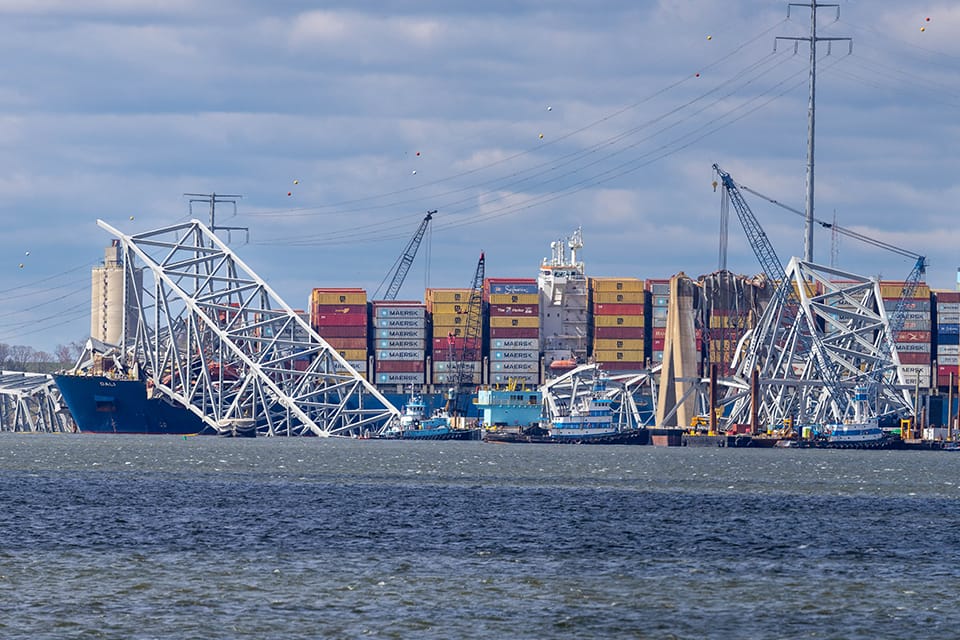
Criminal liability is redefining how catastrophic safety failures are investigated and prosecuted following the MV Dali disaster.
For decades, catastrophic industrial incidents were primarily addressed through regulatory citations, civil penalties, and corrective actions. Most investigations focused on negligence, equipment failures, or breakdowns in safety systems. Financial penalties and compliance improvements were typically viewed as sufficient responses.
The Department of Justice (DOJ) has taken a markedly different approach in the MV Dali case. Instead of treating the incident solely as an operational failure, prosecutors have pursued criminal charges that include conspiracy, obstruction, and false statements. Consequently, the case represents a significant shift in how safety failures may be evaluated.
For safety professionals and organizational leaders, the implications are substantial. The case suggests that criminal liability may arise when organizations knowingly disregard hazards or misrepresent safety information. This evolving approach expands accountability well beyond traditional regulatory enforcement.
From Incident to Criminal Liability
The DOJ reframed the MV Dali disaster as more than a technical failure. Rather than focusing exclusively on the electrical failure that disabled the vessel, prosecutors examined the broader organizational decisions leading up to the incident. According to the indictment, the disaster resulted from a pattern of choices that allegedly created an unsafe operating environment long before the loss of power.
Prosecutors argue that vessel operators knowingly relied on non-compliant equipment and accepted degraded system performance as normal operating practice. In particular, they allege that modifications to generator fuel systems weakened critical redundancies designed to maintain vessel control during abnormal conditions.
This distinction matters because it shifts attention away from isolated equipment failure. Instead, investigators are examining how known risks were managed, tolerated, or ignored over time. Consequently, criminal liability is increasingly connected to organizational decision-making rather than the incident alone.
Allegations of Deliberate Misconduct
One of the most significant aspects of the indictment involves allegations of intentional misconduct. According to prosecutors, the defendants knowingly continued operating despite critical safety deficiencies. Rather than viewing these conditions as isolated oversights, the DOJ argues they reflected conscious decisions that increased operational risk.
The indictment also alleges that critical hazards were not disclosed to the U.S. Coast Guard. Regulatory agencies depend on accurate reporting to evaluate risks and intervene when necessary. When important information is withheld, an essential layer of oversight is removed.
Beyond omission, prosecutors further allege that investigators received false or incomplete information following the incident. Statements concerning vessel configuration and operational history allegedly misrepresented the actual conditions aboard the ship. These allegations strengthen the DOJ’s argument that criminal liability extends to both pre-incident and post-incident conduct.
The indictment also focuses heavily on documentation integrity. Prosecutors allege that inspection records and compliance documents were manipulated or falsified. If proven, these actions undermine not only internal safety systems but also the credibility of regulatory oversight.
Criminal Liability Expands Organizational Accountability
The MV Dali case represents a broader evolution in how accountability is defined. Historically, enforcement concentrated on compliance with technical standards and regulations. Today, investigators increasingly examine leadership decisions, governance practices, and organizational behavior.
The indictment evaluates what leaders knew, when they knew it, and how they responded to identified hazards. Decisions involving degraded equipment, deferred maintenance, or non-standard operating conditions may now receive far greater legal scrutiny.
Similarly, communication practices have become central to enforcement. The DOJ emphasizes that truthful reporting and accurate documentation are not administrative tasks. Instead, they represent critical safety controls that directly influence regulatory decision-making.
As a result, organizations must recognize that criminal liability may arise when transparency and information integrity break down. Compliance alone is no longer sufficient if underlying organizational behavior contradicts documented safety practices.
What Safety Professionals Should Learn
For safety professionals, the MV Dali case reinforces the importance of information integrity. Inspection records, hazard reports, maintenance documentation, and compliance records are not merely administrative requirements. They support operational decisions, regulatory oversight, and organizational accountability.
Accurate hazard escalation is equally important. Safety concerns must be documented clearly and communicated through appropriate channels. Organizational pressures related to production, budgets, or schedules should never prevent accurate reporting.
The case also highlights the importance of Management of Change (MOC). Equipment modifications, even seemingly minor ones, require formal evaluation, approval, and verification. Informal workarounds introduce both technical and legal risk.
Safety professionals increasingly serve as guardians of information quality. Their responsibilities now extend beyond hazard control to ensuring documentation accurately reflects operational reality. This responsibility becomes even more significant as criminal liability receives greater attention from regulators and prosecutors.
Leadership and Organizational Culture
The indictment also provides important lessons for executive leadership. Safety performance reflects organizational priorities, resource allocation, and governance decisions. Leaders influence whether degraded equipment remains in service and whether identified risks receive appropriate attention.
Equally important is organizational culture. Employees must feel comfortable reporting hazards without fear of retaliation or operational pressure. Cultures that discourage transparency create blind spots capable of undermining even sophisticated safety systems.
Leadership must also establish governance structures that verify information independently. Multiple layers of review strengthen accountability and reduce opportunities for misinformation. Effective organizations validate safety-critical information before relying on it for operational or regulatory decisions.
Ultimately, strong safety culture depends upon trust, transparency, and consistent leadership behavior. These principles reduce operational risk while limiting potential criminal liability exposure.
Why the MV Dali Case Matters
The MV Dali disaster represents more than a maritime incident. It signals a broader shift toward evaluating organizational conduct rather than isolated technical failures. Regulators and prosecutors increasingly examine patterns of decision-making, governance, and communication.
This evolution affects every high-consequence industry, including construction, utilities, manufacturing, energy, transportation, and chemical processing. Organizations operating complex systems should expect increased scrutiny regarding documentation accuracy and risk communication.
The case also reinforces the importance of proactive safety management. Organizations should identify hazards early, maintain accurate records, implement effective Management of Change processes, and ensure transparent reporting throughout the organization.
Most importantly, leaders must recognize that criminal liability increasingly depends upon organizational behavior before an incident occurs, not simply the incident itself.
Conclusion
The MV Dali disaster represents a defining moment in industrial safety enforcement. The DOJ’s criminal prosecution demonstrates that catastrophic incidents may now result in consequences extending well beyond regulatory penalties and civil liability. When organizations knowingly accept unmanaged risks or misrepresent critical safety information, criminal liability may become part of the enforcement landscape.
For safety professionals, the lessons are clear. Documentation integrity, transparent communication, effective Management of Change, and proactive hazard escalation are no longer simply best practices. They are essential safeguards that protect workers, organizations, and leaders alike.
Ultimately, the MV Dali case demonstrates that accountability begins long before an incident occurs. Organizations that prioritize truth, transparency, and responsible decision-making will be better positioned to reduce risk, strengthen safety performance, and minimize potential criminal liability.
About the Author
James A. Junkin, MS, CSP, MSP, SMS, ASP, CSHO is the chief executive officer of Mariner-Gulf Consulting & Services, LLC and the chair of the Veriforce Strategic Advisory Board and the past chair of Professional Safety journal’s editorial review board. James is a member of the Advisory Board for the National Association of Safety Professionals (NASP). He is Columbia Southern University’s 2022 Safety Professional of the Year (Runner Up), a 2023 recipient of the National Association of Environmental Management’s (NAEM) 30 over 30 Award for excellence in the practice of occupational safety and health and sustainability, and the American Society of Safety Professionals (ASSP) 2024 Safety Professional of the Year for Training and Communications, and the recipient of the ASSP 2023-2024 Charles V. Culberson award. He is a much sought after master trainer, keynote speaker, podcaster of The Risk Matrix, and author of numerous articles concerning occupational safety and health. He is a proud veteran of the United States Navy and a strong advocate for veteran causes.
References
Kettlekamp, B., & Junkin, J.A. (2025, Sept.). Limits of standard indemnity in contractor injury cases. Professional Safety, 70(9), 20-21. https://www.assp.org/docs/default-source/psj-articles/cp_0925.pdf?sfvrsn=1efe4846_0