


Biological Hazards and Organizational Resilience: Lessons from the MV Hondius
Posted on: June 3, 2026 in General Industry
By: James Junkin
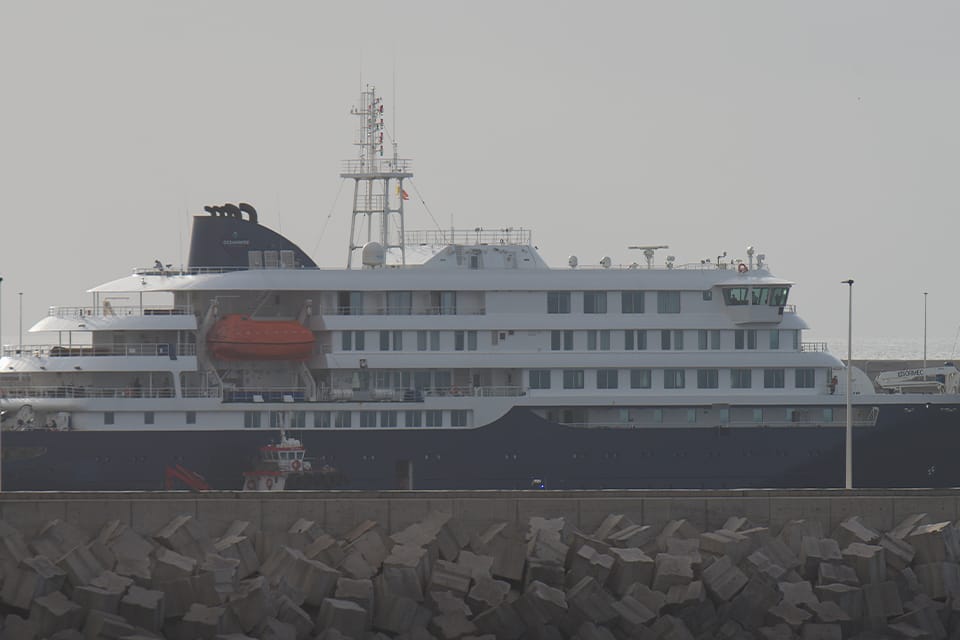
Biological hazards can transform a routine operation into a complex crisis, even when every major system remains functional.
The MV Hondius did not experience a traditional failure. There was no hull breach, navigation error, or catastrophic equipment breakdown. Instead, the vessel faced a different challenge. A suspected biological threat, the hantavirus, gradually altered the operating environment and transformed a routine voyage into a prolonged crisis.
What makes this event valuable for safety professionals is the way ordinary conditions became extraordinary without a clear turning point. The vessel remained operational. Power systems functioned, and crew members continued essential duties. However, medical resources were limited, external assistance was delayed, and regulatory restrictions prevented disembarkation.
As a result, the ship was technically stable but operationally constrained. This distinction is critical when managing complex risks. The incident demonstrates how quickly risk can evolve when conditions change. It also highlights the importance of preparedness, adaptability, and resilience.
Expanding Risk Frameworks to Include Biological Hazards
Many organizations still treat biological hazards as secondary risks. They may appear in procedures and training programs, but they rarely receive the same attention as equipment failures or environmental hazards.
The Hondius incident challenges this assumption. It demonstrates how biological hazards like the hantavirus can move rapidly from theoretical concerns to operational disruptions.
Unlike many workplace hazards, biological threats are difficult to identify early. Symptoms may appear gradually and resemble common illnesses. Consequently, exposure can spread before a clear pattern emerges.
In remote environments, these challenges increase. Access to medical expertise may be delayed. Diagnostic capabilities may be limited. Furthermore, decisions must be made before complete information is available.
Traditional risk frameworks depend on known hazards and predictable outcomes. However, biological hazards often involve uncertainty and changing conditions.
Therefore, organizations must build flexibility into their risk management systems. Plans should allow for evolving information and changing response strategies.
Preparedness is not simply about procedures. It is about capability. Organizations must recognize unusual patterns quickly, escalate concerns early, and access expert support when needed.
The key lesson is clear. Biological hazards should be integrated into core safety management processes rather than treated as specialized concerns.
Implementing Layered Controls in Constrained Environments
Once the hantavirus was identified onboard, available options narrowed significantly. The hazard could not be removed immediately. External intervention was also unavailable. Consequently, the response focused on containment.
Passengers remained in their cabins. Shared spaces were restricted, and interactions were reduced. The operating environment became smaller in order to maintain control. These actions demonstrate the value of layered controls. When elimination and substitution are impossible, organizations must rely on administrative controls and behavioral compliance.
Isolation became the primary barrier against exposure. Distance replaced normal interaction. At the same time, operational processes were simplified to reduce risk. However, these controls require consistent implementation. They depend on clear communication and individual cooperation.
Organizations that prepare for containment scenarios can respond more effectively. Predefined triggers help leaders know when restrictions should begin. Without these triggers, responses may be delayed or applied inconsistently. As a result, exposure can expand before effective controls are established.
The Hondius experience shows that containment is not a single action. Instead, it is a sustained process requiring ongoing attention and adaptation.
Navigating Regulatory and Jurisdictional Constraints
One of the most challenging aspects of the incident involved regulatory restrictions. Land was visible, yet passengers could not disembark. The limitation was not distance. It was authority.
International health regulations and national requirements dictated what actions were permitted. Consequently, critical decisions occurred outside the organization’s direct control. For safety professionals, this illustrates an often-overlooked reality. External authorities may shape outcomes during emergencies.
Organizations must understand the regulatory environments in which they operate. This is especially important when activities cross jurisdictions. Emergency planning should identify applicable regulations, decision-makers, and communication channels before a crisis occurs.
The Hondius incident demonstrates that organizational capability alone may not determine outcomes. Regulatory constraints can become significant operational risks.
Human Factors and Psychological Resilience
As containment continued, another challenge emerged. The issue was no longer just physical exposure. It became psychological as well. Isolation, uncertainty, and restricted movement created additional strain. Cabins became both living spaces and boundaries.
In these situations, communication becomes a critical control measure. Frequent and transparent updates help reduce uncertainty and maintain trust. Without communication, people fill information gaps themselves. This can lead to speculation, anxiety, and declining confidence.
Moreover, prolonged isolation affects attention, decision-making, and compliance. Fatigue develops gradually but can significantly influence performance. For crew members performing essential tasks, the challenge becomes even greater. They must continue working while experiencing the same uncertainty as everyone else.
Resilience does not occur automatically. It must be supported through structure, communication, and access to resources. The Hondius case reinforces an important principle. Human performance is not separate from safety. It is central to safety outcomes.
Building Organizational Resilience
The defining feature of the incident was its duration. The vessel did not resolve the problem quickly. Instead, it maintained operations while managing an evolving situation.
This distinction highlights the difference between response and resilience. Response addresses immediate threats. Resilience enables organizations to continue functioning during extended disruptions.
Sustained operations require adaptability. Roles may shift, procedures may change, and resources may become constrained. Redundancy becomes essential in these situations. Cross-trained personnel and backup systems allow critical functions to continue. Organizations operating in remote environments must be prepared for prolonged independence. External support may not arrive quickly.
The Hondius experience demonstrates that resilience is not a fixed attribute. Rather, it is an ongoing capability developed through planning, training, and continuous improvement.
Key Lessons for Safety Professionals
The Hondius incident offers several important lessons.
First, biological hazards like the hantavirus should be treated as operational risks. They belong in hazard analyses, risk registers, and safety planning processes.
Second, preparedness should include scalable containment strategies. Organizations must anticipate situations where movement becomes restricted.
Third, regulatory constraints should be incorporated into emergency plans. Understanding external authority structures reduces uncertainty during crises.
Fourth, human factors require deliberate attention. Communication, psychological support, and routine management are critical controls.
Finally, resilience depends on endurance. Organizations must prepare not only to respond but also to sustain operations over time.
These lessons apply far beyond maritime environments. They are relevant to any organization facing uncertainty, limited resources, or evolving hazards.
Conclusion
The events aboard the MV Hondius demonstrate how risk can emerge without dramatic failure.
The vessel remained operational throughout the incident. Nevertheless, changing conditions created increasing constraints and complexity. A suspected health threat evolved into an operational challenge, a regulatory issue, and a human performance concern. Each factor reinforced the others.
For safety professionals, the lesson extends beyond biological hazards alone. Modern risks are interconnected, dynamic, and often difficult to predict. Organizations must prepare for uncertainty rather than assuming complete information will always be available. They must also develop systems capable of adapting as conditions evolve.
Ultimately, resilience is measured by the ability to maintain control during disruption. The Hondius did not fail structurally. Instead, it faced a prolonged test of adaptability and endurance. Organizations that recognize the importance of biological hazards, resilience, and human factors will be better prepared for the complex challenges ahead.
About the Author
James A. Junkin, MS, CSP, MSP, SMS, ASP, CSHO is the chief executive officer of Mariner-Gulf Consulting & Services, LLC and the chair of the Veriforce Strategic Advisory Board and the past chair of Professional Safety journal’s editorial review board. James is a member of the Advisory Board for the National Association of Safety Professionals (NASP). He is Columbia Southern University’s 2022 Safety Professional of the Year (Runner Up), a 2023 recipient of the National Association of Environmental Management’s (NAEM) 30 over 30 Award for excellence in the practice of occupational safety and health and sustainability, and the American Society of Safety Professionals (ASSP) 2024 Safety Professional of the Year for Training and Communications, and the recipient of the ASSP 2023-2024 Charles V. Culberson award. He is a much sought after master trainer, keynote speaker, podcaster of The Risk Matrix, and author of numerous articles concerning occupational safety and health. He is a proud veteran of the United States Navy and a strong advocate for veteran causes.