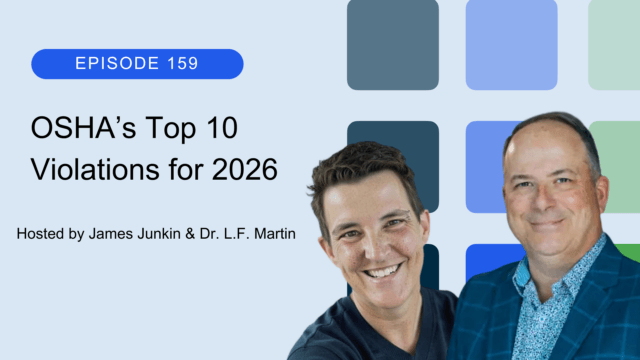
OSHA’s Top 10 Violations for 2026: Audit Yourself Before OSHA Does | Risk Matrix Episode 159
THE RISK MATRIX Cutting-edge podcast on occupational safety and risk management. Hosted by industry titans: JAMES JUNKIN, MS, CSP, MSP,…

Risk Matrix #132: Simultaneous Operations (SimOps) Is Not Just a Safety Checkbox
Organizations managing complex contractor operations face a critical coordination challenge: ensuring multiple work scopes don’t create invisible hazards that contribute to serious incidents.
In this episode Dr. Martin and James examine findings from the Chemical Safety Board’s investigation into the fatal H2S release at Pemex Deer Park Refinery and discuss how permit-to-work systems can fail when simultaneous operations become routine checkboxes rather than active coordination processes. They break down common gaps in contractor safety coordination, including permits that attempt to authorize too many activities under one document, high-consequence work that gets buried in routine documentation, and communication breakdowns between multiple work crews operating in adjacent areas.
KEY TAKEAWAYS
Stay connected with the Risk Matrix on LinkedIn for more safety insights.

THE RISK MATRIX Cutting-edge podcast on occupational safety and risk management. Hosted by industry titans: JAMES JUNKIN, MS, CSP, MSP,…
THE RISK MATRIX Cutting-edge podcast on occupational safety and risk management. Hosted by industry titans: JAMES JUNKIN, MS, CSP, MSP,…
We’ll send you practical and insightful supply chain risk management info that can benefit your business. Plus, important company updates that keep you in the loop.