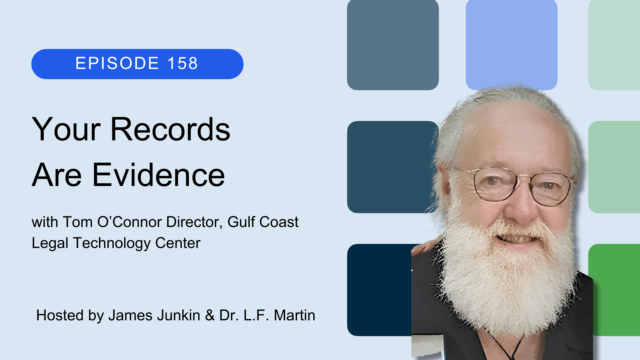
Your Safety Records Are Evidence: Data Mapping and E-Discovery with Tom O’Connor | Risk Matrix Episode 158
THE RISK MATRIX Cutting-edge podcast on occupational safety and risk management. Hosted by industry titans: JAMES JUNKIN, MS, CSP, MSP,…


OSHA regulations have shaped workplace safety for more than 50 years, yet they now face a legal test that could shift national compliance strategies. For many safety professionals, this is a moment that signals real change. The Occupational Safety and Health Administration (OSHA) has been the foundation of modern safety programs since 1970. Now, two Texas produce groups are questioning how far that authority can reach.
Recently, the Texas International Produce Association and the Texas Vegetable Association filed a lawsuit challenging OSHA’s power to issue workplace safety standards. They argue that Congress gave OSHA too much discretion when it allowed the agency to adopt any standard considered “reasonably necessary and appropriate.” They claim those words are too vague and give OSHA nearly unlimited authority without clear limits.
This is not the first attempt to limit OSHA’s authority. In 2021, the Sixth Circuit dismissed a similar case, and the Supreme Court declined review in 2024. However, the legal environment has changed. Over the past two years, the Supreme Court has restricted federal agency authority in several major decisions.
First, the Court overturned Chevron deference. For decades, courts deferred to agencies when interpreting unclear statutes. With that rule gone, agencies must defend their authority without relying on broad interpretations.
Next, the Court restricted the SEC’s in-house enforcement system, calling parts of it unconstitutional. This signaled a wider concern about agencies judging their own cases.
Other agencies, including the FTC and NLRB, have also faced challenges. The Court has shown clear interest in limiting what many call the administrative state. These steps suggest that OSHA regulations could face more scrutiny than ever before.
For safety leaders, this case goes beyond headlines. It may mark a shift in how organizations maintain compliance.
Regulatory uncertainty is a real possibility. If courts restrict OSHA’s rulemaking power, federal standards could change. During this transition, states or industries may create their own guidance.
Compliance strategies may also evolve. Companies could rely less on federal rules and more on internal programs or industry best practices.
Risk management will remain essential. Fewer federal mandates will not reduce workplace hazards. Strong internal safety systems will help protect workers and limit liability, regardless of changes to OSHA regulations.
Judge Matthew Kacsmaryk in Amarillo will hear the case. Any appeal will likely move to the Fifth Circuit, which is known for conservative decisions. If the Fifth Circuit disagrees with the Sixth Circuit’s earlier ruling, the Supreme Court will likely step in. That could lead to a major rewrite of the OSH Act and redefine OSHA’s role for decades.
For safety professionals, the message is clear. Change is coming, and OSHA regulations may look different in the future. Yet the mission stays the same: protecting workers in high-hazard environments. The challenge will be navigating a regulatory landscape that could shift in significant ways very soon.
James A. Junkin, MS, CSP, MSP, SMS, ASP, CSHO is the chief executive officer of Mariner-Gulf Consulting & Services, LLC and the chair of the Veriforce Strategic Advisory Board and the past chair of Professional Safety journal’s editorial review board. James is a member of the Advisory Board for the National Association of Safety Professionals (NASP). He is Columbia Southern University’s 2022 Safety Professional of the Year (Runner Up), a 2023 recipient of the National Association of Environmental Management’s (NAEM) 30 over 30 Award for excellence in the practice of occupational safety and health and sustainability, and the American Society of Safety Professionals (ASSP) 2024 Safety Professional of the Year for Training and Communications, and the recipient of the ASSP 2023-2024 Charles V. Culberson award. He is a much sought after master trainer, keynote speaker, podcaster of The Risk Matrix, and author of numerous articles concerning occupational safety and health.

THE RISK MATRIX Cutting-edge podcast on occupational safety and risk management. Hosted by industry titans: JAMES JUNKIN, MS, CSP, MSP,…
THE RISK MATRIX Cutting-edge podcast on occupational safety and risk management. Hosted by industry titans: JAMES JUNKIN, MS, CSP, MSP,…
We’ll send you practical and insightful supply chain risk management info that can benefit your business. Plus, important company updates that keep you in the loop.