When Compliance Isn’t Enough: Lessons from the Black Lung Crisis | Risk Matrix Episode 155
THE RISK MATRIX Cutting-edge podcast on occupational safety and risk management. Hosted by industry titans: JAMES JUNKIN, MS, CSP, MSP,…

Imminent danger situations test workplace safety systems in real time and require immediate decisions to prevent serious harm. While OSHA standards and inspections play important roles, they cannot address every hazard instantly. Employees are often the first to recognize dangerous conditions because they work closest to the risk. As a result, worker participation remains a critical component of effective safety management.
The Occupational Safety and Health Act of 1970 established a framework that protects workers and promotes employer accountability. However, the law also recognizes that hazards can emerge before regulators have an opportunity to intervene. In those situations, employees may need to act immediately to protect themselves. The Supreme Court addressed this issue directly in Whirlpool Corp. v. Marshall (1980).
The case examined whether workers could refuse dangerous assignments without facing discipline. More specifically, it addressed OSHA’s authority to protect employees confronted with imminent danger. The Court’s decision continues to influence stop-work authority, hazard reporting, and worker protection programs today. Consequently, it remains one of the most important worker-rights decisions in occupational safety and health law.
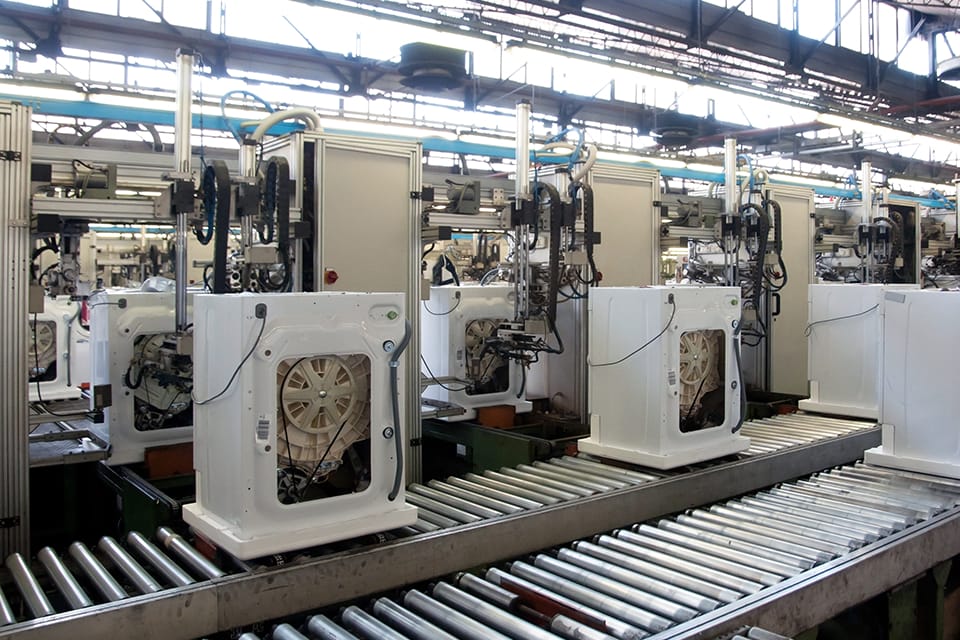
The dispute originated at a Whirlpool Corporation facility during maintenance activities involving large industrial equipment. Employees were assigned work near machinery they believed posed a serious risk. Their concerns focused on equipment stability and the possibility of catastrophic mechanical failure.
The workers concluded that continuing the task could expose them to severe injury or death. Therefore, they refused to perform the assignment. Their decision was based on a belief that the conditions constituted imminent danger and required immediate action.
At the time, OSHA regulations provided limited protections for employees facing dangerous situations. These protections allowed work refusal under narrowly defined circumstances. However, the extent of those protections remained uncertain.
Whirlpool management responded by disciplining the employees. Company leaders argued that work assignments remained management’s responsibility. Furthermore, they maintained that employees could not independently suspend work based on perceived risk.
The dispute eventually reached the Supreme Court. The central issue became whether OSHA could protect workers who refused dangerous assignments. Ultimately, the Court was asked to balance employer authority, worker protection, and regulatory intent.
The Supreme Court upheld OSHA’s regulation protecting workers who refuse assignments involving imminent danger. The Court determined that the regulation aligned with the purpose of the OSH Act. Preventing injuries and fatalities remained the law’s primary objective. Therefore, workers needed protection when immediate hazards threatened their safety.
The Court also recognized the limitations of traditional enforcement. Inspections, investigations, and citations often require time. However, dangerous conditions can develop rapidly and demand immediate action.
As a result, the regulation served as an important extension of OSHA’s protective mission. It allowed employees to respond when regulatory intervention was not immediately available. Consequently, worker protection became more practical and effective.
Importantly, the Court clarified that work refusal rights are not unlimited. Employees must demonstrate a reasonable belief that a serious hazard exists. Additionally, the threat must involve death or significant physical harm.
The Court further emphasized that there must be insufficient time to resolve the issue through normal enforcement channels. These requirements create a high threshold for legitimate work refusal. Therefore, the decision balances worker protection with operational stability.
The concept of imminent danger remains the central principle established by the Whirlpool decision. Under OSHA, imminent danger refers to a condition that could reasonably cause death or serious injury before corrective action occurs. This definition establishes a strict standard. Consequently, not every hazardous condition qualifies.
Several factors determine whether imminent danger exists. Safety professionals must evaluate severity, probability, and timing. The potential consequences must be serious, and the threat must be immediate.
The Court also introduced the concept of reasonable belief. This standard is objective rather than purely subjective. In other words, a reasonable person under similar circumstances must conclude that danger exists.
Timing is equally important. If the hazard can be addressed through ordinary reporting and corrective action processes, work refusal may not apply. Therefore, imminent danger situations involve urgency as well as severity.
For safety professionals, these distinctions are essential. Training programs must help employees recognize qualifying hazards and understand appropriate response procedures.
The Whirlpool decision permanently influenced OSHA enforcement and workplace safety programs. Most importantly, it recognized employees as active participants in hazard control. Workers are not simply recipients of safety rules. Instead, they serve as critical contributors to hazard identification and prevention.
The ruling also reinforced proactive safety management. Employees who identify dangerous conditions can prevent incidents before injuries occur. Consequently, organizations benefit from stronger hazard recognition capabilities.
From an employer perspective, the decision creates both responsibilities and opportunities. Organizations that respond quickly to concerns reduce risk and improve trust. Conversely, delayed responses can increase regulatory exposure and operational disruption.
The ruling also influenced safety management system design. Modern programs now include hazard reporting procedures, escalation pathways, and stop-work authority processes. These elements help organizations respond effectively when risks emerge unexpectedly.
For safety professionals, the Whirlpool decision highlights the importance of worker engagement. Employees possess valuable operational knowledge and often identify risks before management. Therefore, organizations should encourage active participation in safety processes.
Training programs should address more than hazard recognition alone. Employees must also understand stop-work authority, reporting procedures, and imminent danger criteria. This knowledge supports consistent decision-making.
Policy development remains equally important. Organizations should establish clear work refusal procedures and escalation protocols. These expectations must be communicated consistently throughout the workforce.
Safety professionals must also respond quickly when concerns are reported. Timely investigation and corrective action strengthen trust and reduce escalation. Furthermore, they reinforce the credibility of safety programs.
The decision also highlights the importance of culture. Employees must feel comfortable reporting concerns without fear of retaliation. Without trust, even strong systems may fail to identify serious hazards.
The principles established in Whirlpool extend beyond legal compliance. Organizations should integrate worker rights into broader safety management strategies. This begins with proactive hazard identification and ongoing risk evaluation. Early intervention reduces the likelihood of serious incidents.
Leadership involvement remains essential. Senior leaders must support policies that empower employees to raise concerns. They must also provide resources necessary for effective hazard management.
Communication systems play a critical role as well. Employees need accessible reporting channels and confidence that concerns will be addressed. Transparent communication strengthens both engagement and accountability.
Organizations that embrace these principles improve readiness and resilience. Moreover, they align closely with OSHA expectations regarding worker participation and hazard prevention.
More than four decades later, Whirlpool Corp. v. Marshall remains highly relevant. Modern workplaces continue facing situations where hazards develop faster than enforcement mechanisms can respond. Therefore, worker involvement remains essential for effective risk management.
The decision reinforces the idea that safety is a shared responsibility. Employers, employees, and regulators all contribute to hazard control and prevention.
For safety professionals, the ruling provides valuable guidance. It demonstrates that compliance alone is insufficient. Effective safety systems must also support real-time decision-making.
The Whirlpool case remains a reminder that worker protection requires both prevention and response. Organizations must empower employees to act when necessary while maintaining consistent operational controls.
The Supreme Court’s decision in Whirlpool Corp. v. Marshall established an important precedent for worker protection. By affirming the right to refuse dangerous work under imminent danger conditions, the Court strengthened workplace safety significantly. The decision clarified that employees may act when serious threats require immediate response.
The ruling also reinforced the importance of worker participation in safety management. Hazard reporting, stop-work authority, and open communication remain essential components of effective programs.
Ultimately, the Whirlpool decision demonstrates that workplace safety depends on more than rules and inspections. It requires empowered employees, responsive leadership, and systems capable of addressing imminent danger before injuries occur.
James A. Junkin, MS, CSP, MSP, SMS, ASP, CSHO is the chief executive officer of Mariner-Gulf Consulting & Services, LLC and the chair of the Veriforce Strategic Advisory Board and the past chair of Professional Safety journal’s editorial review board. James is a member of the Advisory Board for the National Association of Safety Professionals (NASP). He is Columbia Southern University’s 2022 Safety Professional of the Year (Runner Up), a 2023 recipient of the National Association of Environmental Management’s (NAEM) 30 over 30 Award for excellence in the practice of occupational safety and health and sustainability, and the American Society of Safety Professionals (ASSP) 2024 Safety Professional of the Year for Training and Communications, and the recipient of the ASSP 2023-2024 Charles V. Culberson award. He is a much sought after master trainer, keynote speaker, podcaster of The Risk Matrix, and author of numerous articles concerning occupational safety and health. He is a proud veteran of the United States Navy and a strong advocate for veteran causes.

THE RISK MATRIX Cutting-edge podcast on occupational safety and risk management. Hosted by industry titans: JAMES JUNKIN, MS, CSP, MSP,…

THE RISK MATRIX Cutting-edge podcast on occupational safety and risk management. Hosted by industry titans: JAMES JUNKIN, MS, CSP, MSP,…
We’ll send you practical and insightful supply chain risk management info that can benefit your business. Plus, important company updates that keep you in the loop.