


Watson Grinding and the Rise of Contractor Liability
Posted on: August 20, 2026 in General Industry
By: James Junkin
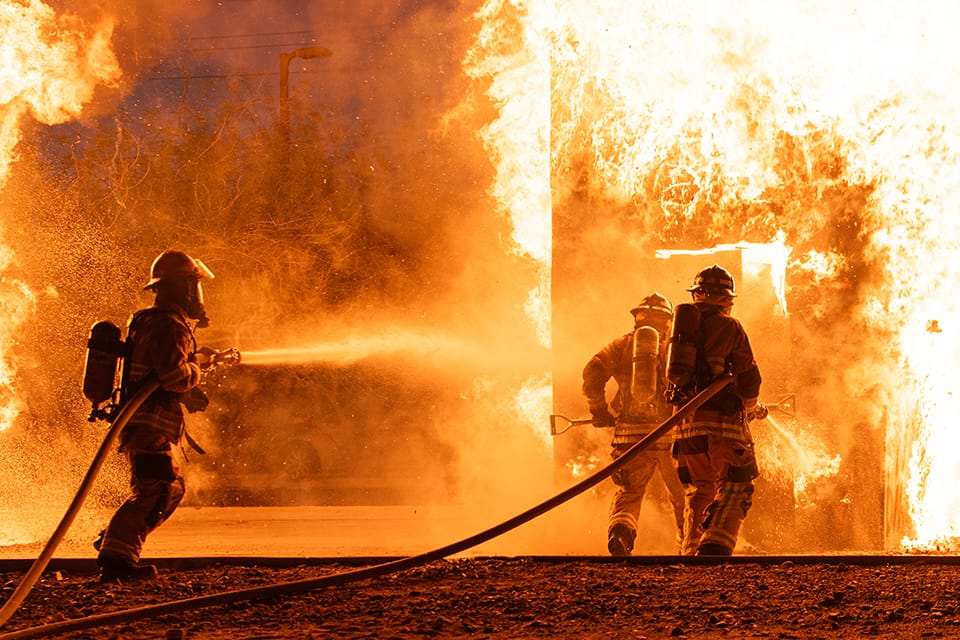
The Watson Grinding explosion shows how contractor liability can extend far beyond a facility’s owner. What began as a propylene leak inside a Houston thermal spray facility became a catastrophe. Three lives were lost, homes were damaged, and the company filed for bankruptcy.
The U.S. Chemical Safety and Hazard Investigation Board (CSB) spent years examining the explosion. Investigators found failures in mechanical integrity, hazard recognition, and emergency preparedness. Catastrophes rarely happen without warning, and Watson Grinding had warning signs for years.
While the technical findings matter, the legal aftermath may prove equally influential. A Harris County jury awarded $61.5 million to affected families. The verdict assigned liability to an organization tied to the facility’s gas detection systems.
For safety and procurement professionals, this case offers lessons well beyond propylene systems. It underscores the need for strong contractor qualification and ongoing oversight. Legal exposure increasingly follows expertise and involvement, not just facility ownership.
The Incident
Shortly before 4:30 a.m. on January 24, 2020, an explosion struck the Watson Grinding facility in Houston. The company performed grinding, machining, and thermal spray coating for industrial clients. The blast originated where propylene fueled a high-velocity oxygen fuel coating process.
The CSB found that a degraded, improperly crimped hose disconnected the night before. This allowed propylene to leak into the building for hours. Manual shutoff valves had also been left open at the end of the prior workday. Gas accumulated until explosive concentrations developed inside the structure.
Employees arriving that morning detected a strong odor and hissing sound. Workers alerted supervisors by text and phone, yet no evacuation occurred. Emergency responders were not immediately contacted, and the area wasn’t restricted. A coating operator then entered the dark building and switched on the lights, likely igniting the vapor.
The explosion killed two employees and injured two more. A nearby resident later died from injuries sustained when the blast damaged his home. More than 450 structures were affected, according to the CSB. Watson Grinding ultimately filed for bankruptcy, but legal consequences continued for years.
CSB Findings and Organizational Failures
The CSB concluded the explosion wasn’t caused by a single equipment failure. Investigators instead found organizational shortcomings across multiple safety layers. Process safety depends on management systems, not just equipment reliability.
A central finding involved the facility’s automated gas detection and shutoff system. It had been installed after a prior 2008 propylene explosion at the same site. By 2020, the system was no longer functioning.
The investigation also found weaknesses in process safety documentation and hazard analysis. Engineering records for the gas detection system were incomplete or poorly maintained. The CSB found little evidence of a comprehensive hazard assessment for the propylene process.
Management of change and mechanical integrity practices were similarly weak. Copper tubing had been replaced with rubber hoses not rated for propylene service. Employees who performed hose crimping had received no formal training.
The Harris County Verdict
The legal fallout from Watson Grinding proved almost as significant as the explosion itself. In August 2026, a Harris County jury awarded $61.5 million to 24 affected families. It highlighted how contractor liability can extend past the facility owner.
Jurors found that 3M bore responsibility tied to the gas detection and alarm systems. This surprised many professionals, since the CSB report focused heavily on Watson Grinding’s own failures. The verdict raised new questions about third-party contractor liability.
Plaintiffs often argue that organizations servicing safety-critical systems share responsibility when those systems fail. Under Restatement (Second) of Torts § 324A, a party undertaking such services may be liable for careless performance. This holds true whether or not that party had authority to fix what it found (Martin, 2026).
This verdict underscores the gap between technical causation and legal liability. Safety investigations ask what happened and why. Civil litigation instead asks about duties, reliance, and foreseeable harm. A contractor’s reports and communications can become central evidence years after work concludes (Martin, 2026).
Expanding Contractor Liability Beyond the Facility Owner
Historically, organizations viewed catastrophes mainly through the lens of owner responsibility. The Watson Grinding litigation shows that view is outdated. Modern litigation strategies examine every organization tied to a failed system, expanding contractor liability considerably.
Investigators and attorneys typically examine every decision that shaped the outcome. This can include manufacturers, engineering firms, maintenance providers, and specialized contractors. Organizations may face litigation even when they never owned the affected facility.
Liability grows further when contractors service safety-critical systems, such as gas detection or emergency shutdown equipment. When such systems allegedly fail, scrutiny turns to whoever designed, inspected, or maintained them. Under a multi-employer framework, responsibility often attaches to whoever exercised authority in practice (Martin, 2026).
For contractor organizations, the lesson is clear. Every inspection report, maintenance record, and deficiency notice may eventually reach a courtroom. Demonstrating technical competence and clear communication matters as much as the underlying technical work itself.
Contractor Management Implications for Hiring Clients
For hiring clients, Watson Grinding reinforces the need to rethink contractor management. Many organizations still lean on OSHA rates, insurance certificates, and regulatory history when selecting contractors. These metrics reveal little about a contractor’s ability to handle safety-critical work.
Organizations should place greater emphasis on technical competency during prequalification. Contractors handling critical systems should demonstrate training, quality assurance, and documented procedures. Hiring clients must understand how work will be performed, verified, and maintained over time.
Clearly defining contractual responsibilities also matters greatly. Contracts should specify duties for inspection, maintenance, and escalation of unresolved hazards. Ambiguity here often becomes a central problem during litigation.
Ongoing oversight after contract award remains equally important. Safety-critical work should undergo audits, field observations, and periodic reassessments. Contractor findings should never simply be filed; they need an owner, a deadline, and verified closure (Martin, 2026).
Procurement’s Role in Risk Reduction
Procurement professionals influence risk long before a contractor arrives onsite. Selection criteria used during sourcing can affect the reliability of safety-critical systems. Purely commercial decisions can carry significant safety and legal consequences.
Cost pressure shouldn’t overshadow risk-informed decision-making. Selecting contractors on price alone can create unintended consequences in engineering or process safety work. The lowest bidder rarely represents the lowest total risk.
Procurement should collaborate closely with operations, engineering, and safety teams. This ensures selection decisions reflect both commercial and risk considerations. Viewing contractor selection as strategic, not transactional, reduces future contractor liability significantly.
Conclusion
The Watson Grinding explosion was far more than an isolated equipment failure. Deficiencies in mechanical integrity, process safety information, and emergency preparedness combined to create tragedy. Warning signs existed for years before the explosion finally occurred.
The Harris County verdict adds another dimension to this story. It shows that legal accountability can extend well beyond the facility owner. Contractors and service providers may face real scrutiny when safety-critical systems fail.
For safety professionals, the case reinforces the need for systems that exceed regulatory minimums. Watson Grinding’s propylene operation wasn’t even subject to OSHA’s Process Safety Management standard. Yet sound process safety principles could still have prevented the incident.
For procurement teams, contractor management remains essential to enterprise risk management. Strong programs protect lives, preserve continuity, and reduce contractor liability exposure. The legacy of Watson Grinding should be a renewed commitment to shared responsibility.
About the Author
James A. Junkin, MS, CSP, MSP, SMS, ASP, CSHO is the chief executive officer of Mariner-Gulf Consulting & Services, LLC and the chair of the Veriforce Strategic Advisory Board and the past chair of Professional Safety journal’s editorial review board. James is a member of the Advisory Board for the National Association of Safety Professionals (NASP). He is Columbia Southern University’s 2022 Safety Professional of the Year (Runner Up), a 2023 recipient of the National Association of Environmental Management’s (NAEM) 30 over 30 Award for excellence in the practice of occupational safety and health and sustainability, and the American Society of Safety Professionals (ASSP) 2024 Safety Professional of the Year for Training and Communications, and the recipient of the ASSP 2023-2024 Charles V. Culberson award. He is a much sought after master trainer, keynote speaker, podcaster of The Risk Matrix, and author of numerous articles concerning occupational safety and health. He is a proud veteran of the United States Navy and a strong advocate for veteran causes.
References
Martin, L. F. (2026). The record decides: Safety and industrial hygiene expert services in workplace injury, occupational disease, and OSHA litigation. LF Martin LLC.