
Trust But Verify: Contractor Safety Management for Utilities Operations
Posted on: July 30, 2026 in Utilities/Energy
By: James Junkin
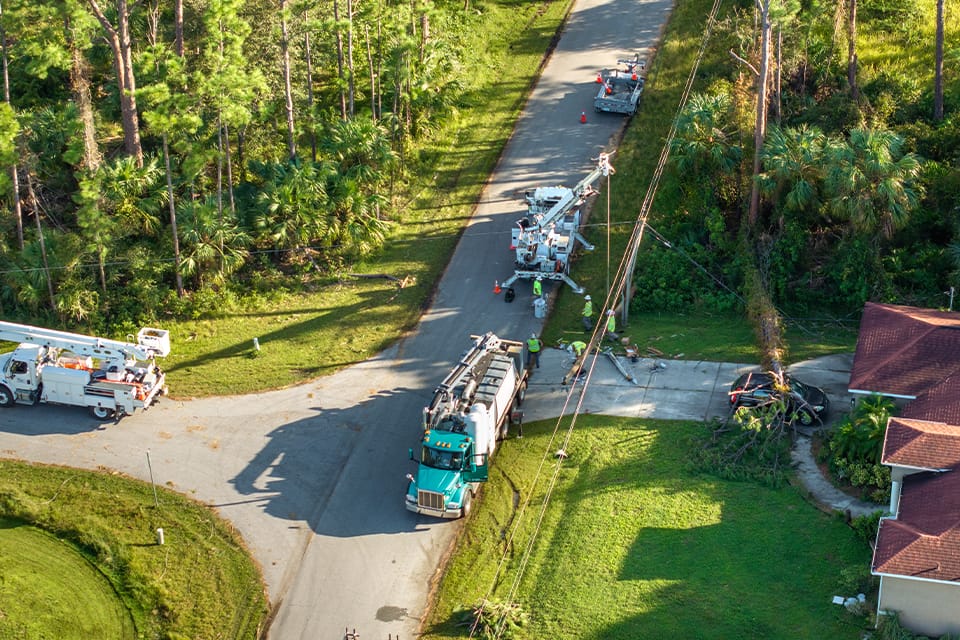
Contractor safety management is essential for protecting workers, maintaining reliable utility operations, and preventing serious incidents. Utility operators depend on contractors to perform critical work across transmission, distribution, generation, telecommunications, construction, vegetation management, maintenance, and emergency response. Because contractors often work under different management structures and organizational cultures, effective oversight is essential.
Prequalification systems, written safety programs, and contractual requirements provide an important foundation. However, documentation alone cannot guarantee safe work practices in the field. High-performing organizations consistently demonstrate three characteristics: active supervision, routine audits, and meaningful leading safety metrics.
Together, these elements create a proactive system for identifying risks before injuries, outages, environmental events, or fatalities occur. Instead of relying solely on lagging indicators, utility operators can strengthen accountability and improve contractor performance through continuous verification.
Active Supervision Drives Contractor Safety Management
Active supervision is one of the strongest predictors of successful contractor safety management. Contractors work in dynamic environments where conditions change rapidly. Energized systems, confined spaces, excavation work, traffic exposure, severe weather, and emergency restoration all require continuous hazard recognition. As conditions evolve, supervisors help ensure crews adjust their controls accordingly.
Effective supervisors do much more than observe work. They verify hazard recognition, reinforce procedures, confirm personal protective equipment use, and ensure proper energy isolation practices. They also coach workers, answer questions, and intervene whenever unsafe conditions develop.
Leading utility organizations expect supervisors to spend significant time in the field. Frequent engagement demonstrates leadership commitment while creating opportunities to correct unsafe behaviors immediately. As a result, workers become more willing to report hazards and discuss concerns before incidents occur.
Active supervision also strengthens contractor alignment. Contractors often support multiple utility clients with different expectations and standards. Regular interaction between utility representatives and contractor supervisors reduces confusion while reinforcing consistent safety expectations.
Perhaps most importantly, active supervision improves situational awareness. Serious injuries rarely result from one failure alone. Instead, they typically develop from multiple small deviations that remain uncorrected. Engaged supervisors recognize those warning signs before they escalate.
Routine Audits Verify Performance
Even the strongest contractor safety management program requires routine verification. Written procedures, certifications, training records, and safety manuals establish expectations. However, they cannot confirm those expectations are consistently followed during daily operations. Routine audits bridge that gap by evaluating actual work practices.
Audits answer one essential question. Are contractor safety requirements being translated into safe behaviors in the field? Without structured verification, organizations often rely on assumptions that allow risks to remain hidden.
Management system audits evaluate organizational processes such as training, regulatory compliance, corrective actions, and leadership involvement. Operational audits examine work planning, coordination, scheduling, and supervision. Meanwhile, field audits observe actual work activities and verify that critical controls are functioning effectively.
Field audits provide particularly valuable insight because they evaluate behavior instead of paperwork alone. Auditors observe job briefings, hazard assessments, energy isolation, fall protection, exclusion zones, equipment use, and workforce engagement. These observations provide a realistic picture of contractor performance.
The strongest audit programs move beyond checklist compliance. Instead, they emphasize risk-based auditing by evaluating whether critical controls effectively prevent serious injuries and fatalities. This approach provides significantly greater value than documentation reviews alone.
Routine audits also identify systemic issues before they contribute to major incidents. Repeated deficiencies involving lockout/tagout, supervisor engagement, hazard assessments, or subcontractor oversight often indicate broader organizational weaknesses. Trend analysis helps organizations address root causes rather than isolated findings.
Audit programs also strengthen accountability. Contractors clearly understand performance expectations when verification occurs consistently. Strong performance can be recognized, while recurring deficiencies receive additional coaching, oversight, or corrective action.
Most importantly, audit findings must lead to meaningful improvements. Organizations should establish corrective actions, assign accountability, verify completion, and measure long-term effectiveness. This disciplined approach prevents recurring deficiencies while strengthening continuous improvement.
Leading Indicators Improve Contractor Safety Management
Historically, organizations measured contractor performance using lagging indicators such as TRIR, DART rates, lost-time injuries, and workers’ compensation claims.
Although these metrics remain valuable, they measure events that have already occurred. Once an injury happens, the opportunity for prevention has passed. Furthermore, contractors may report few injuries while still operating with significant uncontrolled risk.
Leading indicators provide much greater predictive value. They measure activities and behaviors that influence future safety performance before incidents occur. Consequently, organizations gain opportunities to intervene much earlier.
Meaningful leading indicators include field observations, supervisor engagement, job hazard analysis quality, safety meeting participation, corrective action closure, near-miss reporting, critical control verification, employee engagement, and audit completion rates.
Organizations should also avoid measuring activities that simply produce attractive statistics. Hundreds of safety observations offer little value if they overlook high-risk hazards. Instead, metrics should emphasize quality, meaningful engagement, and serious injury prevention.
Integrating Supervision, Audits, and Metrics
The greatest results occur when supervision, audits, and leading indicators function together. Active supervision provides real-time visibility into contractor performance. Audits validate whether observed conditions represent isolated issues or systemic weaknesses. Leading indicators then convert those observations into measurable performance data that supports informed decision-making.
This integration creates a continuous improvement cycle. Supervisory observations influence audit priorities. Audit findings shape leading indicators. Performance metrics then direct future supervisory attention toward emerging risks.
For example, increasing audit findings involving energy isolation should trigger additional field supervision and stronger verification activities. Organizations can establish leading indicators that measure isolation verification, pre-job planning quality, and supervisory observations. Performance data then demonstrates whether corrective actions are reducing risk.
Integrated systems also strengthen contractor accountability. Everyone evaluates performance using consistent expectations and measurable evidence rather than subjective opinions. This transparency supports stronger partnerships while reinforcing safety expectations.
Another important advantage is earlier identification of Serious Injury and Fatality (SIF) precursors. High-risk exposures often appear within audit findings and field observations before injury statistics reveal emerging problems. Integrated contractor safety management helps organizations intervene before catastrophic events occur.
Building a Strong Contractor Safety Culture
Long-term contractor safety management depends on organizational culture. Policies and procedures establish expectations, but culture influences daily decisions. Workers determine whether safety represents a genuine organizational value or simply another production priority.
Visible leadership commitment remains one of the strongest cultural influences. Utility leaders who routinely visit worksites, discuss hazards, and support safe decisions demonstrate that worker protection matters. These actions build trust while reinforcing accountability.
Supervisors also shape culture every day. Quality job briefings, critical control verification, positive coaching, and timely intervention reinforce safe behaviors. Conversely, overlooking shortcuts or emphasizing production over safety weakens even well-designed programs.
Open communication also strengthens contractor relationships. Workers should feel comfortable reporting hazards, near misses, procedural weaknesses, and operational concerns without fear of retaliation. Organizations that encourage these conversations typically identify risks much earlier.
Shared ownership further strengthens safety culture. Every worker, supervisor, contractor, and utility representative should understand their responsibility for hazard identification and risk reduction. As engagement increases, organizations typically experience stronger accountability and more consistent safety performance.
Recognition also reinforces positive behaviors. Celebrating strong planning, hazard recognition, quality supervision, and proactive reporting helps establish lasting safety expectations. Over time, these behaviors become part of organizational culture rather than isolated achievements.
Leading indicators support cultural development as well. Metrics related to engagement, corrective actions, field observations, and participation communicate what leadership truly values. When organizations consistently measure prevention activities instead of injury statistics alone, contractor culture continues to mature.
Conclusion
Modern contractor safety management extends far beyond compliance and injury statistics. Utility operators face increasingly complex risks involving aging infrastructure, workforce transitions, severe weather, renewable energy, and expanding capital projects. Consequently, contractor oversight requires continuous visibility into field operations rather than documentation alone.
Active supervision, routine audits, and leading indicators provide the foundation for effective contractor safety management. Together, they create a proactive system that identifies risks early, validates critical controls, strengthens accountability, and supports continuous improvement.
Organizations that embrace this approach achieve more than regulatory compliance. They improve operational reliability, strengthen contractor relationships, enhance workforce engagement, and reduce serious injuries. Ultimately, successful contractor safety management ensures every contractor has the leadership, oversight, and support needed to return home safely at the end of every workday.
About the Author
James A. Junkin, MS, CSP, MSP, SMS, ASP, CSHO is the chief executive officer of Mariner-Gulf Consulting & Services, LLC and the chair of the Veriforce Strategic Advisory Board and the past chair of Professional Safety journal’s editorial review board. James is a member of the Advisory Board for the National Association of Safety Professionals (NASP). He is Columbia Southern University’s 2022 Safety Professional of the Year (Runner Up), a 2023 recipient of the National Association of Environmental Management’s (NAEM) 30 over 30 Award for excellence in the practice of occupational safety and health and sustainability, and the American Society of Safety Professionals (ASSP) 2024 Safety Professional of the Year for Training and Communications, and the recipient of the ASSP 2023-2024 Charles V. Culberson award. He is a much sought after master trainer, keynote speaker, podcaster of The Risk Matrix, and author of numerous articles concerning occupational safety and health. He is a proud veteran of the United States Navy and a strong advocate for veteran causes.