
Safety Management and AI in Contractor Safety
Posted on: August 4, 2026 in General Industry
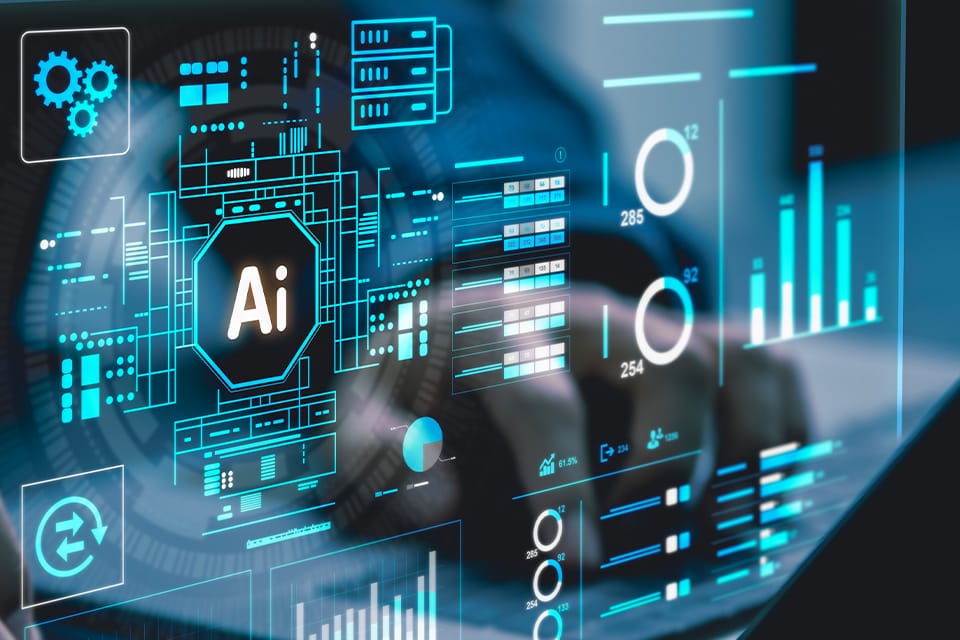
Safety management is entering a new era as artificial intelligence (AI) reshapes how organizations evaluate contractors, identify risks, and improve decision-making. AI is now one of the most discussed technologies in contractor safety. While the opportunities are significant, so is the hype. Organizations must understand where AI adds value and where human expertise remains essential.
Safety professionals have experienced similar waves of enthusiasm before. Behavior-based safety, predictive analytics, leading indicators, and serious injury prevention models all introduced valuable capabilities. However, none replaced leadership, sound judgment, or organizational learning. AI should be viewed through the same practical lens.
The real question is not whether AI will influence contractor safety. It already does. Instead, organizations should ask whether AI will strengthen safety management or create the illusion that automation alone improves safety performance.
Safety Management Requires More Than Automation
The greatest risk associated with AI is not technological failure. Rather, organizations may assume they are safer simply because they have automated more processes. True safety management has never been defined by sophisticated software. It depends on leadership, accountability, learning, and sound decision-making.
AI can transform contractor management, improve access to information, and accelerate organizational learning. However, it cannot replace experienced professionals who understand operational risk. The future of contractor safety will rely on human intelligence supported by artificial intelligence, not replaced by it.
AI Excels at Managing Information
Contractor safety has always been an information management challenge. Organizations routinely oversee hundreds or thousands of contractors operating under different regulations, languages, and safety expectations. Reviewing policies, qualifications, certifications, and training records requires significant time and effort. This is where AI demonstrates exceptional capability.
Modern AI platforms can compare contractor documents against OSHA requirements, ISO 45001 standards, client expectations, and internal qualification criteria within seconds. They can identify missing information, highlight inconsistencies, extract evidence, and prioritize areas requiring review. Consequently, safety professionals spend less time reviewing paperwork and more time evaluating field performance and reducing operational risk.
In this role, AI amplifies professional expertise rather than replacing it. The technology improves efficiency while allowing experienced safety professionals to focus on higher-value responsibilities.
AI Supports Decisions but Cannot Replace Judgment
AI excels at identifying patterns and surfacing information deserving further attention. Systems can recognize deteriorating contractor performance, increasing injury trends, training gaps, weak permit-to-work controls, and missing supervisory oversight. These observations provide valuable insight during contractor qualification reviews and compliance evaluations.
However, contractor approval rarely depends on documentation alone. Leadership capability, organizational maturity, responsiveness to corrective actions, and learning culture remain difficult to measure objectively. Consequently, these decisions continue to require experienced professional judgment.
Organizations should remember an important principle. AI identifies questions. People remain responsible for the answers. Accountability cannot be delegated to algorithms, regardless of how sophisticated they become.
Behavioral Monitoring Has Important Limitations
Many AI technologies promise to detect unsafe behaviors automatically. Camera systems can identify missing personal protective equipment, recognize distractions, monitor phone use, detect fatigue, and observe unusual movements. These capabilities appear impressive and often provide useful information. Nevertheless, observations rarely explain why behaviors occur.
For example, AI may identify a worker standing on a ladder without fall protection. However, it cannot fully understand failed anchor points, conflicting instructions, schedule pressure, inadequate planning, or poor supervision. It detects behavior but not the organizational conditions creating it.
This distinction aligns closely with Human and Organizational Performance (HOP) principles. Workers respond to the environments organizations create. Therefore, safety management must focus on improving systems rather than simply identifying individual behaviors.
Technology Detects Impairment but Not Performance
Another rapidly expanding application involves impairment detection. Technology providers increasingly market systems capable of identifying fatigue, distraction, microsleep, cognitive impairment, and potential substance impairment. Some physiological indicators, particularly fatigue, demonstrate promising scientific validity.
However, technology cannot reliably measure judgment, motivation, resilience, intent, or decision quality. Organizations should therefore avoid overstating these capabilities. False positives also introduce legal, ethical, and operational concerns that require careful governance.
If AI identifies a worker as impaired, organizations should establish transparent review processes. Human oversight remains essential before significant employment or operational decisions are made.
AI Can Transform Organizational Learning
Perhaps AI’s greatest contribution is not prediction but learning. Most organizations possess years of incident investigations, audit findings, corrective actions, regulatory citations, and near-miss reports. Collectively, these records contain valuable operational knowledge. Unfortunately, organizations often struggle to convert that information into meaningful insights.
AI excels at recognizing patterns across enormous datasets. It can identify recurring conditions, cluster similar events, reveal weak signals, and expose relationships that might otherwise remain hidden. For example, it may identify common contributors to hand injuries, line-of-fire incidents, or struck-by events before traditional analysis detects a trend.
Importantly, AI does not prevent incidents. People do. Its value lies in strengthening safety management by accelerating organizational learning and directing leadership attention toward emerging risks.
Safety Management Depends on Leadership
Despite rapid technological advances, many aspects of safety remain fundamentally human. AI cannot create trust, demonstrate fairness, inspire confidence, or establish psychological safety. Likewise, dashboards cannot replace meaningful conversations, and cameras cannot build respectful workplace relationships.
Safety climate develops through leadership behavior, consistent decision-making, accountability, worker involvement, and open communication. Organizations investing heavily in technology while neglecting these foundations may find sophisticated tools unable to compensate for weak leadership.
Technology supports effective safety management, but leadership determines whether organizations truly improve safety performance.
Responsible AI Requires Strong Governance
As AI capabilities continue evolving, governance becomes increasingly important. Organizations should establish clear decision rights defining where AI assists and where professional judgment remains mandatory. AI can review documents, identify missing evidence, detect anomalies, and surface emerging risks. However, it should never independently approve contractors, impose discipline, or replace human accountability.
Governance should also address automation bias. Sophisticated systems often create excessive confidence in algorithmic recommendations. Therefore, organizations must maintain verification processes that validate AI-generated conclusions before acting upon them.
Privacy and ethics deserve equal attention. Camera monitoring, biometric analysis, behavioral analytics, fatigue detection, and wearable technologies all raise important questions about transparency, consent, data ownership, and appropriate use. Responsible organizations establish governance frameworks before implementing these technologies at scale.
Conclusion
Three principles should guide every organization’s AI strategy. First, AI should strengthen judgment rather than replace it. Second, AI should accelerate organizational learning instead of creating an illusion of control. Third, accountability for safety management must always remain human.
Every generation of safety professionals encounters new technologies promising transformational change. Artificial intelligence is exceptionally capable, but it remains a tool rather than a substitute for leadership. Organizations that combine AI with experienced professionals, thoughtful governance, and strong safety management systems will be best positioned to improve contractor safety, strengthen decision-making, and build resilient organizations.
About the Author
Josh Ortega is Vice President of Global HSE & Sustainability at Veriforce. With over 30 years of experience, he builds technology-enabled systems that prevent serious incidents and strengthen learning. He contributes to industry guidance and speaks widely on contractor risk, insights, and the future of safety leadership.