Atlas or Beacon? Debating Contractor Safety Performance
Inside a Contractor Selection Debate at the 2026 Veriforce Client Summit
Posted on: October 29, 2026 in General Industry
By: Josh Ortega
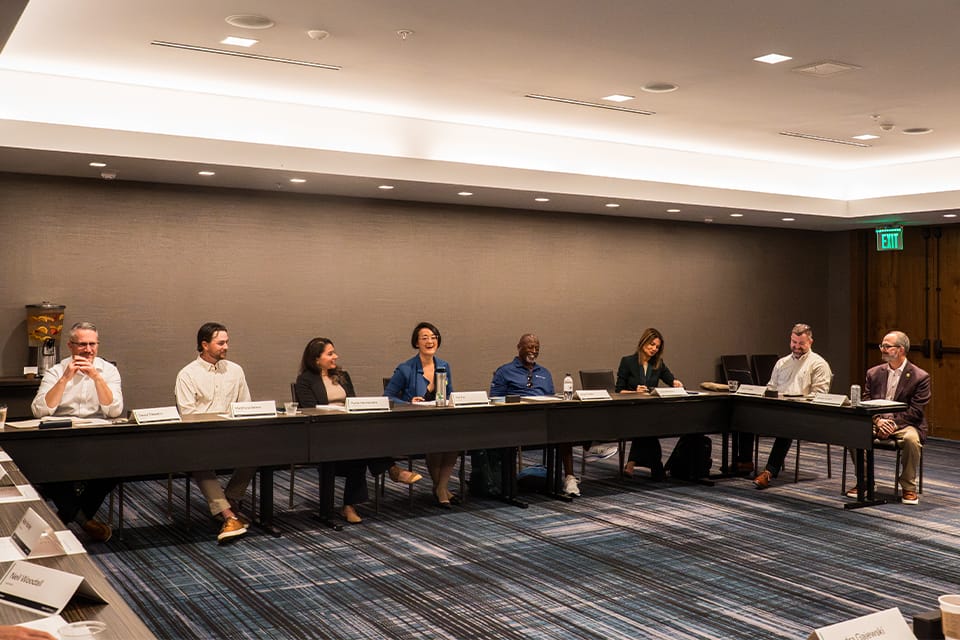
Veriforce wrapped up its 2026 Client Summit in Nashville, where over 125 health and safety professionals shared experiences, challenged assumptions, and sharpened strategies for 2027. Between great golf, food, and live music, the event kicked off with a special roundtable debate led by Veriforce Strategic Advisory Board Chair James Junkin.
The roundtable set out to understand and challenge how HSE leaders and contractor management professionals evaluate contractor safety performance. Junkin presented participants with two similar, fictional contractors, Atlas and Beacon. Both had the same three-year Total Recordable Injury Rates. Both met the hiring client’s baseline requirements.
Atlas had polished programs, strong audit scores, more training hours, and sophisticated reporting. Beacon showed evidence that it verified practical skills, coached in the field, investigated incidents in more detail, and was willing to stop work when controls were inadequate. Beacon also disclosed a high-potential event and the lessons that followed.
Which of these details would participants actually rely on to evaluate and qualify these contractors? Which contractor would participants award the bid to, and why? The discussion exposed a gap between the evidence participants valued and the information available to make the selection. This gap became one of the most useful themes of the roundtable’s discussion.
HSE Leaders Had More Questions than Answers
The exercise quickly moved beyond the numbers. Participants wanted to know how supervisors supported their work crews, whether workers could demonstrate critical skills, how contractors addressed concerns, and what happened when conditions changed.
Several participants favored Beacon. They saw value in Beacon’s attention to changing conditions, supervisor continuity, and heavy involvement from operational leadership. Others initially found Atlas more convincing. As the discussion progressed, some reconsidered their choice. One participant pointed out that either selection could be defensible on the information available. Additional context could change the decision. Tellingly, participants expected their existing scoring and approval processes to favor Atlas, even as the discussion highlighted Beacon’s strengths.
HSE Leaders Debate Specifics on Safety Performance
This raised a difficult question: Are hiring clients scoring the contractor information that’s easiest to collect, or the evidence that best informs the decision? Both contractors could still be defensible with further context; the concern is whether the current process surfaces that context. Participants devoted a fair amount of time to challenging three sources of information.
Written Programs: Great on Paper, Proven in the Field?
Written programs received considerable attention. Participants agreed contractors must meet requirements, while questioning how much polished documents reveal about execution or safety performance in the field. A program can describe an effective approach, but do supervisors and workers understand it, have the resources to apply it, and use it when a job becomes difficult?
Training Seat Time vs. Skill Time
Training also received a fair amount of discussion. More hours may reflect a substantial investment, but participants wanted to see whether people could demonstrate the skills the work requires. Tasks involving hazardous energy, confined spaces, lifting, or work at height, attendance records alone did not show whether workers were ready.
Which Interpretation Is Correct?
The conversation also challenged simple interpretations of other measures. Few stop-work interventions might reflect good planning, but may signal weak reporting or low worker confidence. A high observation count says little about whether they address the hazards most relevant to the work. An audit score becomes more useful when we understand what the auditor assessed, how they identified findings, and what happened afterward.
The Group Agreed: Serious Events Require a Closer Look
The group also explored how a serious incident should influence selection. Would a hypothetical fatality change a participant’s choice?
Participants wanted to know what happened, whether the event involved similar work, what the investigation found, and how the contractor had responded. Participants weighed the value of disclosure and learning against legal restrictions and incomplete investigations. One participant described suspending a contractor’s bidding opportunities, pending review, after repeated fatalities. No single rule resolved every situation.
Participants saw a need to review serious event history more carefully. The relevance to proposed work, a contractor’s response, and evidence of corrective action, are questions that deserve attention before a decision becomes a routine approval or rejection.
Contractor Evaluation Continues After Approval
Some of the most useful evidence becomes available during mobilization and execution. Participants described efforts to connect prequalification with operational readiness, field performance, and post-project evaluation. They also acknowledged how hard it is to bring those pieces together for operational leaders.
That shift raises a question worth exploring: Should hiring clients assess prequalification and ongoing qualification differently? Before awarding the business, the available evidence may focus on management systems, relevant experience, and demonstrated capability. Once work begins, the assessment can draw on what is happening in practice. The information available changes, and how we evaluate may need to change with it.
A contractor’s initial approval can establish a starting point. Maintaining confidence means watching the work itself, the people supervising it, and how the contractor resolves concerns. Bringing those observations back into evaluation could help hiring clients decide more confidently whether to continue work, add oversight, or support improvement.
New contractors pose a practical challenge: how can a hiring client establish confidence before seeing them perform?
Earlier contractor engagement and targeted verification can help clarify what hiring clients know, what remains uncertain, and what needs closer attention during mobilization and execution. These questions deserve further discussion as contractor evaluation evolves.
Where the Debate Goes Next
Participants left with practical next steps. Treat contractor data as the start of a conversation, not the final word. Engage contractors earlier, ask how they plan to manage the work, and verify that their arrangements hold up in the field. Health and safety leaders also saw opportunities for Artificial Intelligence to connect scattered information and prioritize what matters most, as long as it draws on relevant inputs and people keep decision authority.
The Veriforce Client Summit encourages debates like these, and any hiring client can join. If your organization is questioning whether its scoring reflects the real risks of the work, or looking for ways to connect prequalification with ongoing contractor performance, connect with Veriforce. We’ll help you identify gaps in your current approach and strengthen how you evaluate and oversee contractors.