
Hydration Science for Oil & Gas Workers
What’s changed, how much is enough, and why electrolytes matter
“Eight glasses a day” was never built for a twelve-hour shift in FR coveralls on an unshaded pad. Current guidance from OSHA, NIOSH, the CDC, the National Academy of Medicine, and EFSA points to a different model: scheduled fluid intake with a firm upper limit, and electrolytes replaced mainly through regular meals rather than a case of sports drinks.
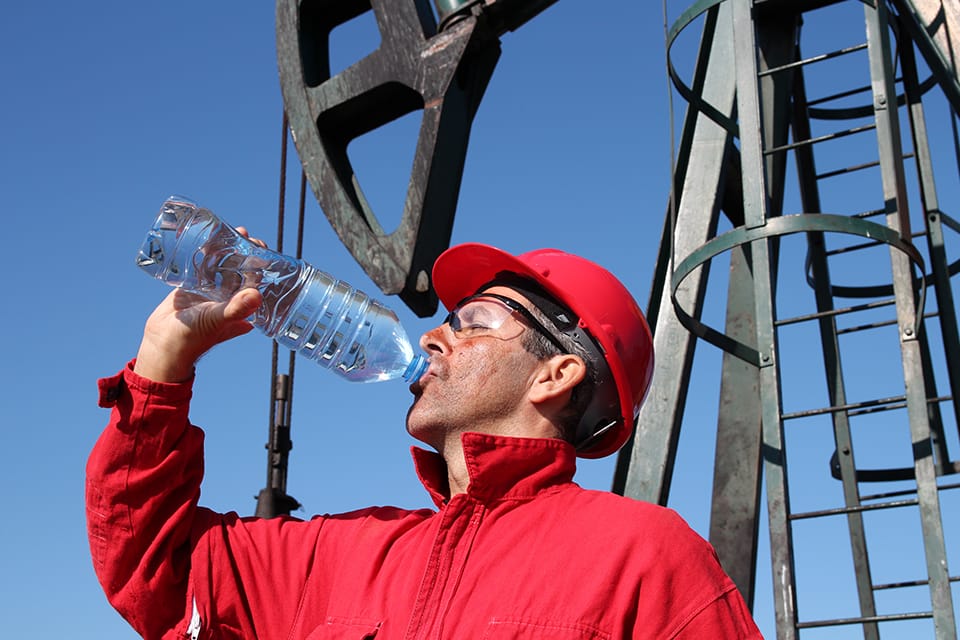
This whitepaper turns that guidance into a practical program for your crews. You’ll learn:
- Why thirst isn’t a reliable cue under heat, workload, and PPE, and what drinking pace federal guidance recommends instead
- Where the ceiling is. Over-drinking can dilute blood sodium and cause a medical emergency, and in the early stages it looks almost exactly like dehydration
- What the guidance actually says about electrolytes, including why salt tablets need a physician’s direction
- Where the 2026 regulatory landscape stands, including OSHA’s proposed heat rule, the expanded Heat National Emphasis Program running through 2031, and the heat index triggers worth building to now
- A seven-step field protocol covering hydration stations, pre-shift screening, acclimatization, WBGT-based work/rest cycles, supervisor training, and the records an inspector would ask for
For most operators, the gap isn’t practice. It’s documentation. This paper helps you close it.